In This Article
Follow BestForAndroid


Short answer: Work the fixes from gentle to drastic. Clear the Gmail cache, then update the app. Those two clear most cases in under five minutes. If Gmail still folds, clear its data and sign back in, then re-install it as the clean reset. None of these steps can lose your email, because it lives on Google’s servers and the app is only a window onto it.
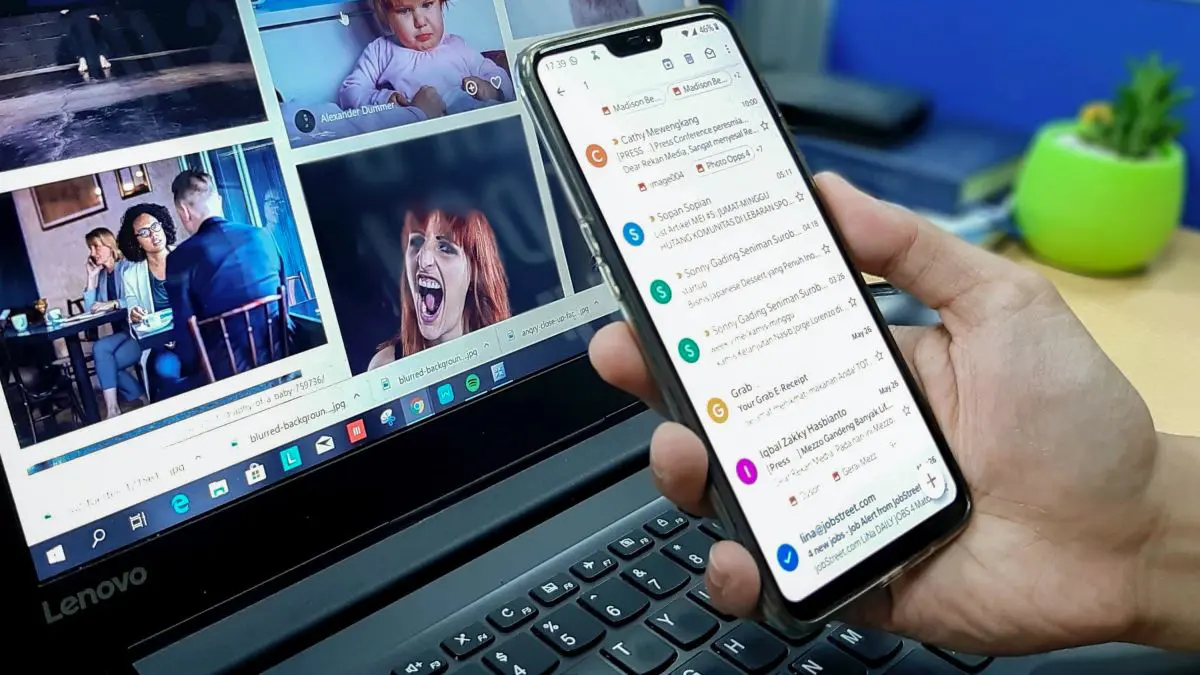
A Gmail app that crashes the moment you tap it is one of the more common Android annoyances, and one of the easier ones to clear. In most cases it traces back to a corrupt local cache, an out-of-date app, or a sync that got interrupted partway through. None of those are serious, and none of them put your mail at risk.
The plan below is a short ladder. Start at the top, run each fix only if the one before it did not work, and stop the moment Gmail behaves. Most people never get past the first two rungs. Before you reach for anything drastic, it helps to know why the crashing happens in the first place.
Your email itself is never the thing at risk. Gmail keeps your messages on Google’s servers, and the app on your phone is just a sync surface that mirrors them. The most disruptive step here signs you out and makes you log back in, which is the only real friction. After you sign in, everything reappears. If your trouble turns out to be broader than one app, the editor’s general Android troubleshooting guide walks the same gentle-to-drastic order for the rest of the system.

Try these first, in order
If you only have a couple of minutes, run down this list. Each move is gentle, none of them touches your actual email, and any of the first two usually does the job on its own.
- Clear the Gmail cache: open Settings, Apps, See all apps, Gmail, Storage and cache, then tap Clear cache. Leave Clear storage alone for now. Re-open Gmail and let it sync.
- Update the app: open the Play Store, search Gmail, and tap Update if one is waiting. A version mismatch after a Google account change is a frequent trigger.
- Force stop, then re-open: a zero-risk reset that clears a hung session. Settings, Apps, Gmail, Force stop, then launch it again.
- Clear the app data: Settings, Apps, Gmail, Storage and cache, Clear storage. This signs you out and wipes local state, so you re-sign in afterward.
- Re-install Gmail: the cleanest reset of all. Remove the user-installed updates, then install a fresh copy from the Play Store and sign in.
Why Gmail crashes in the first place
Three causes account for almost every crash. The most common is a corrupt local cache, usually left behind by a recent app update or a sync that did not finish cleanly. Clearing the cache fixes this, which is why it sits at the top of the ladder and resolves the bulk of cases on its own.
The second is an out-of-date app. When Google changes something at the account or sync-API level, an older Gmail build can choke on it until you update. The third, and the rarest, is a corrupt local sync state, which tends to show up on very large mailboxes after a network drop during a heavy sync. Android Authority’s rundown of why apps keep crashing walks through the same general pattern for any misbehaving app, not just Gmail.
Notice that all three are software problems, and all three are reversible. That is the reason the fixes run from light to heavy. You are working through a short list of likely causes in the order they actually occur, not gambling on a full wipe.
| What went wrong | The fix that clears it |
|---|---|
| Corrupt local cache | Clear cache, the lightest step and the most common cure |
| Out-of-date app | Update Gmail from the Play Store |
| Corrupt local sync state | Clear app data, then sign back in |
| A stubborn install that survives all of the above | Re-install Gmail fresh |
The full fix order, step by step
Here is the same ladder with the exact menu paths. The names shift a little between stock Android and skins like Samsung One UI, so if a path does not match yours, open Settings and search for the keyword in bold. Google’s own page on how to free up storage and clear an app’s cache on Android spells out the difference between Clear cache and Clear storage, which is the one distinction worth getting right here.
Step 1, clear the cache. Settings, Apps, See all apps, Gmail, Storage and cache, Clear cache. Do not tap Clear storage at this stage. Open Gmail afterward and give it a moment to re-sync.
Step 2, update Gmail. Open the Play Store, search Gmail, and tap Update if one is available. Restart the app once it finishes. This catches the crashes that follow a Google account-level change.
Step 3, clear the app data. Settings, Apps, Gmail, Storage and cache, Clear storage. This signs you out and clears all local state, so re-open Gmail, sign back in, and let the first sync finish. It is more disruptive than step 1 but clears cases that a cache wipe cannot.
Step 4, re-install Gmail. Long-press the Gmail icon and choose Uninstall, then install a fresh copy from the Play Store. Gmail ships pre-installed on most phones, so this removes the user-installed updates and lays down a clean build. Sign in and you are done.
Step 5, check account sync. Settings, Accounts, your Google account, Account sync, and confirm Gmail is toggled on. If it already is, toggle it off and back on to nudge a stalled sync into life.
Step 6, restart and update the system. If everything above fails, the trouble may be wider than Gmail. Settings, System, System update, Check for update, apply anything waiting, then restart and test again.
Symptom to fix, at a glance
If you would rather match the exact behaviour you are seeing, start in this table, then drop into the matching step above. The patterns are consistent enough that the right first move is usually obvious.
| What you are seeing | First fix to try |
|---|---|
| Crashes the instant you open it | Clear the cache, then update |
| Crashes only on one specific email | Open that email at gmail.com in a browser, then update the app |
| Keeps saying “Authentication required” | Sign out and back in under Accounts, your Google account |
| Every app says “has stopped”, not just Gmail | Restart the phone and check for a system update |
| Still crashing after a clean re-install | Trim Days of mail to sync, or free up storage |
Frequently asked questions
Will I lose my emails? No. Your mail lives on Google’s servers, and the app is only a local mirror of it. Every fix on this page, including the clear-data and re-install steps, runs without touching a single message.
Why does it crash the second I open it? Almost always a corrupt local cache, often left by a half-finished sync. Step 1 clears it. If the crash survives a cache wipe, move down to clearing the data.
What if it only crashes on one email? That message probably has a malformed attachment or some HTML the app cannot render. Open it at gmail.com in a browser to confirm it is fine on the web, then update the Gmail app, which usually fixes the rendering.
Why does it keep saying “Authentication required”? This is a sign-in problem rather than a crash. Settings, Accounts, your Google account, sign out, then sign back in. If the account itself is locked, head to accounts.google.com in a browser and clear any pending security checks first.
My other Google apps crash too. Same fix? Largely, yes. Clear cache, update, clear data, re-install works across most of them. For wider Android gremlins beyond a single app, the editor’s general troubleshooting guide linked earlier covers the broader resets in the same gentle-to-drastic order.
The bottom line
A crashing Gmail app looks alarming and almost never is. The cause is usually a corrupt cache, an old app version, or a tangled sync state, and the ladder of cache, update, clear data, re-install settles the great majority of cases in well under ten minutes. Respect the order, gentle moves first, and stop as soon as the app opens cleanly.
The deeper steps, account sync, a system update, a factory reset as the genuine last resort, are rarely needed. Most of the time you will be back in your inbox after step 1 or step 2, with nothing lost but a couple of minutes.