
In This Article
Follow BestForAndroid


- Android 17 Beta 1 dropped February 13, 2026, two days late but months earlier than normal
- Google replaced Developer Previews with a continuous “Android Canary” channel that pushes updates the moment they pass internal testing
- Platform stability targeted for March 2026, stable release coming in Q2 2026 (likely June)
Google did a complete structural overhaul that makes Developer Previews obsolete.
Android 17 Beta 1 arrived on February 13, 2026, marking the first time a major Android version skipped Developer Previews entirely. No DP1, DP2, or DP3 releases stretching from November through January. Just straight to beta, that too in February.
The Canary Channel: Android’s Continuous Revolution
Android Canary replaced Developer Previews as Google’s way to test the latest builds with experimental APIs and upcoming behavior changes. That is not all, it offers three massive benefits:
Features and APIs land in Canary as soon as they pass internal testing rather than waiting for quarterly releases. Early testing in Canary results in more polished Beta experiences. Canary supports over-the-air updates, and it is directly integrated with developer workflows, giving them access to the earliest release window to provide feedback.
This is how Chrome development works. Rolling releases. Constant updates. Features ship when ready, not when the calendar says so. And now Google applied that same idea to the Android platform.
Android 17 No Longer Allows Tablet Opt-Outs
Android 17 removes the developer opt-out for screen size and orientation restrictions on large-screen devices. When your app targets SDK 37, it must be ready to adapt.
This is Google finally admitting that gentle encouragement doesn’t work. Developers ignored tablet optimization for over a decade because they could. Android’s fragmented ecosystem meant phone-only apps mostly worked, even if they looked terrible on 12-inch tablets.
Google has removed that escape hatch. All developers must adapt, or their apps become unusable on the fastest-growing Android form factors, i.e., foldables and large-screen devices.
The timing is thoughtful. Platform stability is targeted for March with final APIs and largely final behaviors. Developers have roughly 4 months to fix their apps or risk them breaking on millions of devices.
The Performance Upgrades Nobody Sees, But Everyone Feels
Android 17 brings performance improvements, reduced missed frames, and a better garbage-collection mechanism for memory cleanup.
Garbage collection alone is one of the most important performance factors in any operating system, and better garbage collection means smoother scrolling, fewer janky animations, less battery drain from background cleanup, and more responsive apps.
Notification restrictions also matter because some apps spam notifications to keep themselves alive in memory. Restricting that behavior means better battery life and less distraction from what matters most.
These aren’t headline features. These are actually what give Android OS a premium touch, as they won’t make your device feel like it’s struggling under the weight of background processes.
The Release Timeline: Faster Than Ever
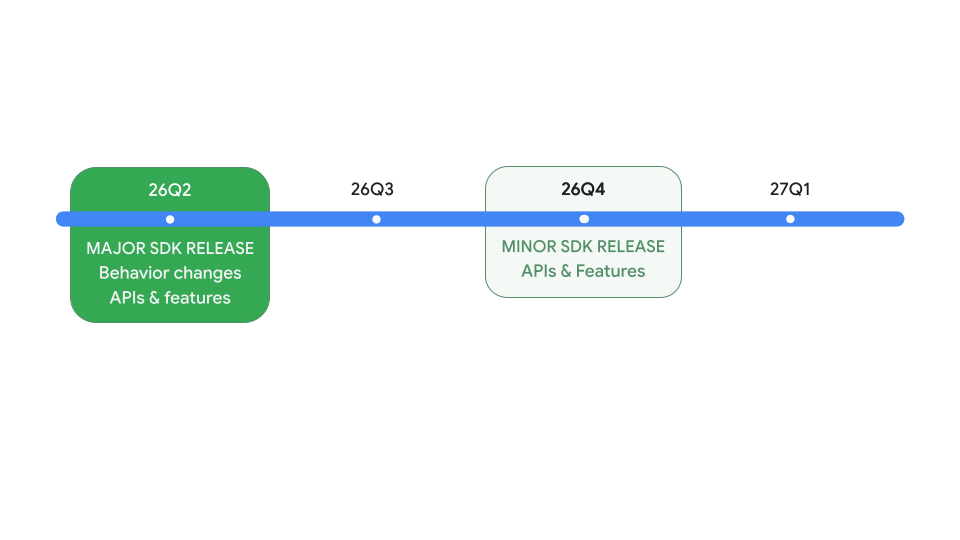
Following the release of Android 17 Beta 1, Platform Stability is targeted for March with final NDK/SK APIs. The final release is coming in June.
For context: Google released Android 16 Developer Preview 1 in November 2024, the first beta in January 2025, platform stability in March 2025, and a stable release in June 2025.
Android 17 compressed that entire timeline, completely eliminating the November preview and January beta, and jumping straight to the February beta, with a stable release expected in March and a final release in June.
Google is moving fast.
This Q2 2026 release would be the major Android release this year with behavior changes, new APIs, and features. It will be followed by a minor update and the addition of fresh features in Q4 2026.
Who Gets It and When
Android 17 Beta 1 is available for Pixel 6 series and newer devices. That includes Pixel 6, 6 Pro, 6a, 7, 7 Pro, 7a, 8, 8 Pro, 8a, 9, 9 Pro, 9 Pro XL, Fold, Tablet, and the Pixel 10 series.
Owners can enroll in the Android Beta Program to get the Android 17 Beta 1 over-the-air update. There is no need to manually flash the OS. Just opt in and wait for the update.
For non-Pixel devices? Samsung is expected to base One UI 9 on Android 17, with the Galaxy Z Flip 8 and Galaxy Z Fold 8 likely being the first devices to launch with Android 17 and One UI 9 in July.
Other manufacturers will most probably follow their usual patterns. For instance, OnePlus, Xiaomi, and Motorola flagships would receive updates within a few months of a stable release. Mid-range devices can expect it six months later, if they’re lucky. Lastly, budget devices might never get to experience it at all.
The Verdict
Android 17 Beta 1 itself isn’t revolutionary, not even in terms of the features. The real revolution is how it is being delivered to the devices.
With this latest Android version, Google has compressed an entire development cycle, eliminated the preview phase, and established a continuous integration model that matches web development velocity.
The performance improvements will be invisible to users but felt everywhere. The camera and media tools give developers pro-grade capabilities. The connectivity upgrades remove friction from everyday tasks.
This is Google finally acting like the platform owner they’ve always claimed to be. Decisive. Fast-moving. Willing to break through.
Android 17 Beta 1 is available now for Pixel 6 and newer devices through the Android Beta Program. Platform Stability targeted for March 2026. Stable release planned for Q2 2026.


