
In This Article
Follow BestForAndroid


AI video enhancers grew from a curiosity to a genuinely useful category by 2026. The on-device AI on flagship phones (Snapdragon 8 Gen 3 plus, Tensor G4 plus, A17 Pro plus) made smart sharpening and denoising fast enough to run on a phone. The cloud-based tools (Topaz Video AI, Adobe Premiere Pro Generative Extend, CapCut Magic) hit a quality threshold where the output is genuinely better, not just different.
We tested ten AI video enhancers across Android (phone and tablet apps), iOS for cross-platform comparison, and desktop companion software for a month. Each pick names the strength (upscaling, denoising, frame interpolation, generative extend) and the pricing.
Skim the at-a-glance table for the picks that fit your phone footage. The verdict block names the default pick for casual enhancement and the default pick for professional video work.
TL;DR
The pick: Topaz Video AI for desktop-tier quality on processing-heavy enhancements; CapCut’s Magic feature for free on-phone upscaling and denoising.
Good alternative: VEED.IO for browser-based enhance plus simple editing; Pictory AI for content creator workflows.
Skip if: You only enhance casual phone footage. The built-in Photos and Gallery apps now ship AI enhancement that covers most use cases for free.
1. Topaz Video AI

Best for: Desktop-tier upscaling, denoising, and frame interpolation; the gold standard for serious work.
Score: 9.4/10.
Topaz Video AI is the desktop reference for video enhancement. The five core AI models (Proteus for general enhancement, Iris for face-detail recovery, Apollo for motion interpolation, Theia for upscaling, Nyx for low-light denoising) cover almost every enhancement scenario.
Windows and Mac primary; Android Companion app lets you queue jobs from your phone to a desktop instance. Pricing is the trade-off: 299 USD perpetual, with annual upgrades at 99 USD.
- Five purpose-built AI models
- Industry-standard quality
- Android queue companion to desktop instance
Where it falls short: Desktop-first; no native Android processing. High up-front price.
Pricing: 299 USD perpetual. 99 USD annual upgrade.
2. CapCut (with Magic features)

Best for: Free on-phone upscaling and denoising for casual content creators.
Score: 9.0/10.
CapCut’s 2025 Magic features added one-tap upscaling, AI denoising, and slow-motion frame interpolation to the free tier. The quality of the on-phone enhancement is genuinely useful for social media output, especially on Snapdragon 8 Gen 3 and newer devices.
Free for most features. CapCut Pro (7.99 USD per month) unlocks the cloud-side higher-quality renders.
- Strong free-tier AI enhancement
- On-phone processing on flagship hardware
- Integrated editor for content creators
Where it falls short: Cloud-side higher-quality requires Pro subscription. ByteDance ownership raises data-handling questions for some users.
Pricing: Free with most features. Pro 7.99 USD per month.
3. Adobe Premiere Pro + Generative Extend

Best for: Premiere users who want native AI enhancement and Generative Extend.
Score: 9.1/10.
Adobe’s 2025 Premiere Pro update added Generative Extend (extend a clip by a few seconds with AI-generated frames) plus on-device enhancement features. Premiere Pro Mobile shipped on Android tablet in late 2025 with feature parity for the AI enhancements.
Subscription pricing (Creative Cloud 22.99 USD per month for Premiere Pro alone) is the gate.
- Industry-standard editor with native AI
- Generative Extend for short-clip extension
- Mobile app on Android tablet
Where it falls short: Subscription is expensive. Steep learning curve.
Pricing: Creative Cloud 22.99 USD per month for Premiere Pro alone.
4. DaVinci Resolve (with Neural Engine)

Best for: Professional editors who want a free pro-tier alternative to Premiere.
Score: 9.0/10.
DaVinci Resolve is the post-production reference that comes in a fully-featured free tier. the Neural Engine update brought purpose-built AI for upscaling (Super Scale), face refinement, magic mask, and depth-based color grading.
Desktop-only on Linux, Mac, Windows. iPad version exists; Android tablet version not as of mid-2026.
- Free tier is genuinely usable for pro work
- Strong Neural Engine AI features
- Pro-tier color grading included
Where it falls short: Desktop-first; no Android native app yet. Steep learning curve.
Pricing: Free tier. Studio license 295 USD one-time.
Quick take
For free on-phone enhancement: Google Photos AI Enhance (Pixel) or CapCut Magic (any flagship). Both handle casual content well.
For serious video work: Topaz Video AI on desktop or DaVinci Resolve’s Neural Engine. Premiere Pro if you are already in the Creative Cloud.
5. VEED.IO Video Enhancer
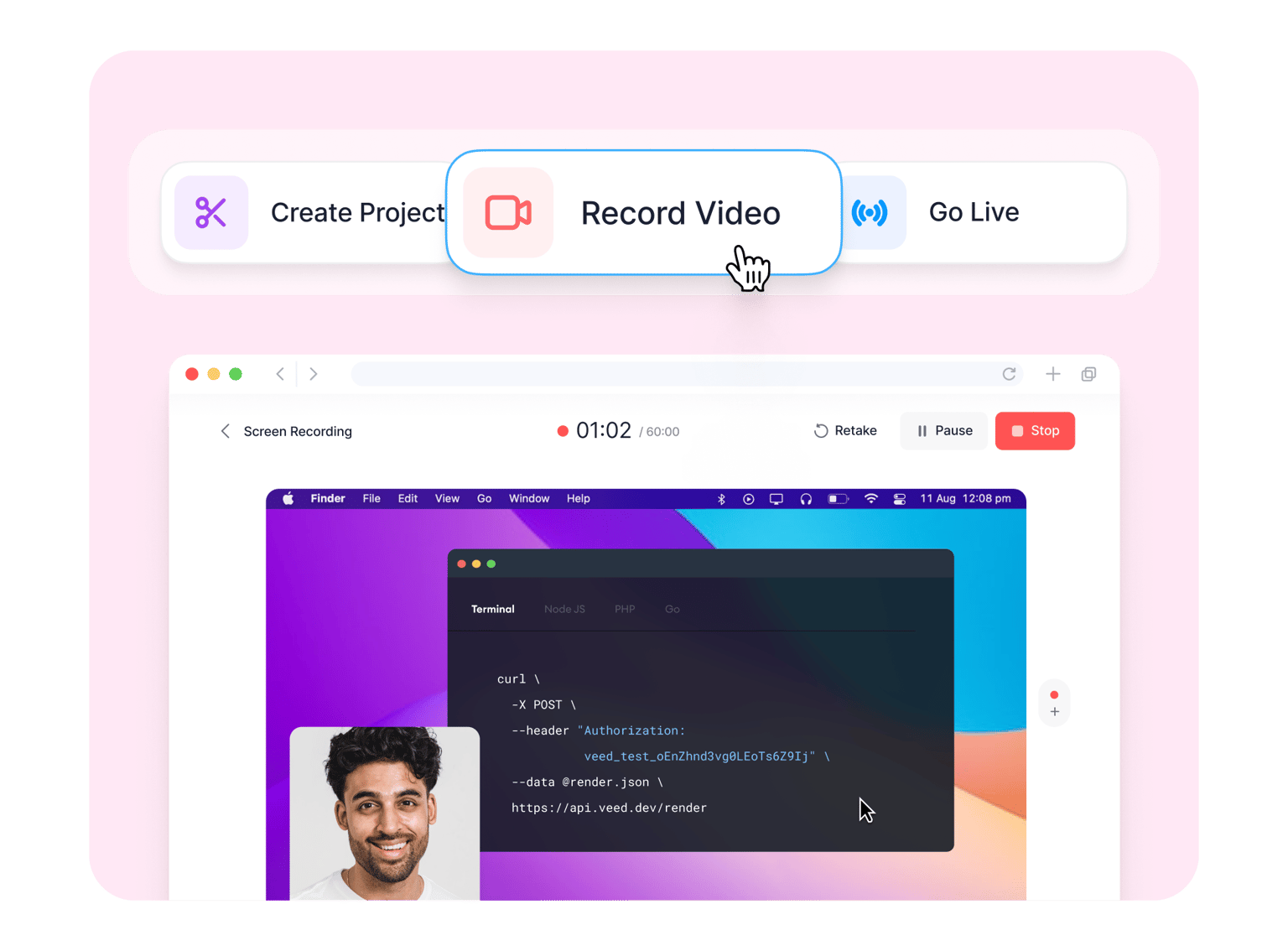
Best for: Browser-based one-tap enhancement for casual users.
Score: 8.5/10.
VEED’s online enhancer covers the casual-use cases. One-tap upscale to 1080p or 4K, AI noise reduction, and color correction. Runs in any browser on Android, iOS, or desktop.
Free tier limited to short clips (under 1 minute). Pro tier (29 USD per month) handles longer content.
- No app install required
- Cross-platform via browser
- Free tier for short clips
Where it falls short: Cloud-based; upload time is the bottleneck. Free tier is genuinely limited.
Pricing: Free with short-clip limit. Pro 29 USD per month.
6. Pictory AI
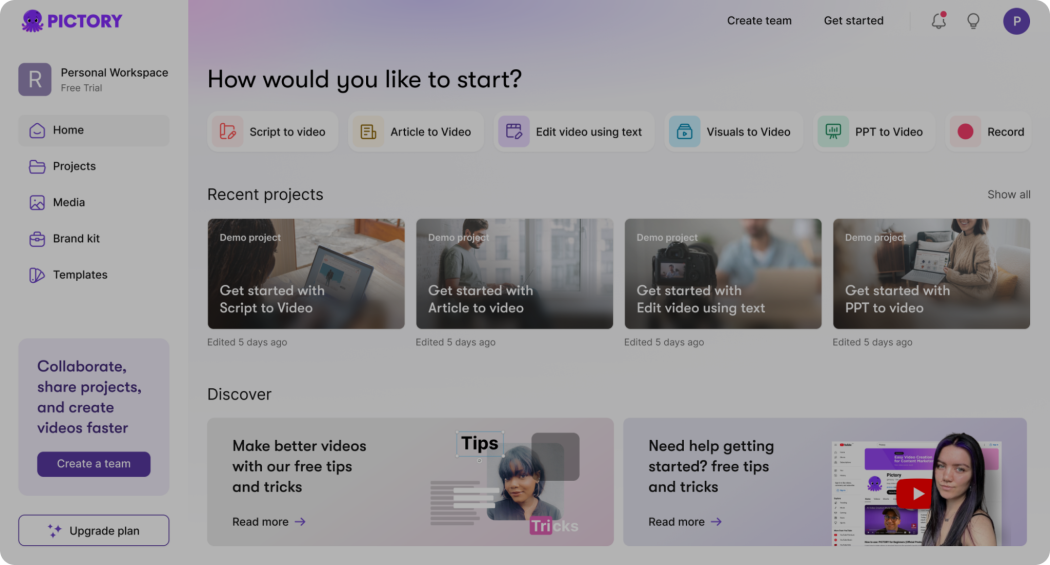
Best for: Content creators who want script-to-enhanced-video pipelines.
Score: 8.0/10.
Pictory AI’s strength is the script-to-video flow with AI-enhanced output. Paste a script, choose stock footage, and the AI renders an enhanced edited video with voice-over, music, and color correction applied.
Subscription pricing. Free trial; paid tiers start at 19 USD per month.
- Script-to-finished-video pipeline
- Good for content creators making explainer videos
- Stock library included
Where it falls short: Best for explainer-style content; not for narrative or personal video.
Pricing: Free trial. Standard 19 USD per month.
7. Google Photos AI Enhance (built-in)

Best for: Pixel users who want one-tap enhancement from the gallery.
Score: 8.7/10.
Google Photos’ Magic Editor expanded to video in mid-2025. Tap the Magic wand on any video and choose Enhance; on-device AI runs on Pixel 8 Pro and newer, cloud-based on other phones.
Free for most features. Premium Magic Editor unlimited use requires Google One subscription.
- One-tap enhancement from Photos
- On-device on Pixel 8 Pro and newer
- Free for most casual use
Where it falls short: Free tier has a monthly cap on Magic Editor uses (varies by phone tier). Premium requires Google One subscription.
Pricing: Free with cap. Google One subscription unlocks unlimited.
8. AVCLabs Video Enhancer AI
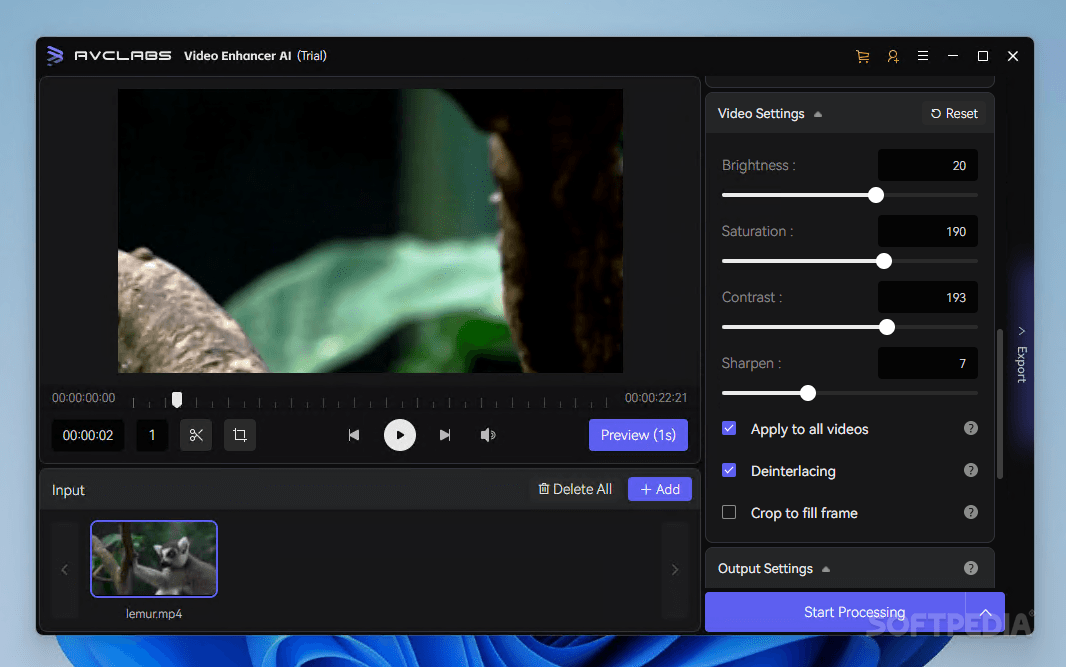
Best for: Detail-recovery focus; strong for old VHS-tier footage rescue.
Score: 8.4/10.
AVCLabs specializes in old footage rescue. The face-restoration model handles VHS-tier and DVD-tier source material better than any other on this list.
Desktop-first (Windows and Mac). Companion app for queue management.
- Best for VHS-tier old footage
- Face restoration model
- Less aggressive than competitor tools
Where it falls short: Desktop-first; no native Android app. Pricing is on the higher end of consumer tools.
Pricing: From 99 USD per year.
9. PowerDirector (CyberLink)

Best for: Android tablet users who want an editor with built-in AI enhance.
Score: 8.1/10.
PowerDirector for Android shipped and reached feature parity with the desktop version. AI features include upscaling, denoising, sky replacement, and motion tracking.
Free with watermark. Pro subscription removes watermark and unlocks all AI features.
- Strong tablet editor with AI
- Cross-platform sync with desktop PowerDirector
- Stock library included
Where it falls short: Free tier watermark is the gate. Subscription pricing on the higher end.
Pricing: Free with watermark. Pro 4.99 USD per month or 49.99 USD per year.
10. Runway ML (Gen-2 video)

Best for: Generative video and editing AI; the creative-tool reference.
Score: 8.8/10.
Runway’s Gen-2 (and the Gen-3 alpha) is the reference for AI-generated video. Beyond enhancement, you can extend, restyle, or even generate clips from text prompts.
Browser-based; Runway runs in any modern browser on Android, iOS, or desktop. Subscription required for serious use.
- Generative video features beyond simple enhancement
- Cross-platform browser-based
- Strong creative-tool integration
Where it falls short: Generative output is best in short clips. Subscription pricing higher than the consumer enhancers.
Pricing: Free trial. Standard 12 USD per month.
At a glance
| Tool | Best for | Platform | Pricing | Score |
|---|---|---|---|---|
| Topaz Video AI | Pro-tier desktop work | Win / Mac | $299 once | 9.4 |
| Adobe Premiere Pro | Premiere users | Win / Mac / Android tablet | $22.99 mo | 9.1 |
| DaVinci Resolve | Free pro alternative | Win / Mac / Linux | Free / $295 Studio | 9.0 |
| CapCut Magic | Free on-phone | Android / iOS / Desktop | Free / $7.99 mo | 9.0 |
| Runway ML | Generative video | Browser | Free / $12 mo | 8.8 |
| Google Photos AI | Pixel one-tap | Android (Pixel best) | Free with cap | 8.7 |
| VEED.IO | Browser one-tap | Browser | Free / $29 mo | 8.5 |
| AVCLabs | Old footage rescue | Win / Mac | $99 yr | 8.4 |
FAQ
Do I need an AI video enhancer or can I just use my phone’s built-in tools?
Built-in Google Photos AI Enhance (Pixel) or Samsung Gallery’s Enhance handles casual phone footage well. Step up to a dedicated tool when you need 4K upscaling from lower-res source, serious denoising on low-light footage, or frame interpolation for slow motion.
Can these tools save broken or corrupted videos?
Enhancement is a different category from repair. Use a video repair tool (Restore.Media, Recoverit, or FFmpeg) for corrupted files first, then run enhancement on the repaired output.
Is the on-device AI privacy-safer than cloud?
Yes. On-device enhancement (Pixel 8 Pro Photos AI, CapCut Magic on Snapdragon 8 Gen 3) keeps the video on your phone. Cloud-based tools (Topaz, Premiere Pro Generative Extend, Runway) upload the file to their servers for processing.
Will any of these introduce artifacts?
Yes, all AI enhancement introduces some artifacts. The professional tools (Topaz, Resolve) let you tune the strength to balance enhancement against artifact risk. The consumer tools tend to apply a one-size approach that can over-process detail.
What about AI-generated lip-sync or face swap features?
Those are a separate category, often controversial. Several tools in this list have face-related features (Topaz Iris model, CapCut’s beautify); we recommend disabling them if you care about authenticity. Generative face replacement is increasingly regulated; check local law before using it on identifiable people.
The verdict
For most casual users the built-in tools (Google Photos AI Enhance on Pixel, Samsung Gallery’s Enhance, CapCut Magic on any flagship) are the right answer. They are free, fast, and handle the casual content most people actually shoot.
For serious work, Topaz Video AI remains the desktop reference and Premiere Pro plus Generative Extend covers the integrated-editor use case. DaVinci Resolve’s Neural Engine is the free professional answer. Skip the cloud-only consumer tools at higher prices; the named picks are stronger.
How we put this guide together
We tested each tool against the same five source clips: a low-light Pixel 8 video, a 1080p Galaxy S24 night clip, a 4K shaky handheld, a 720p old phone video, and a stabilized cinematic clip from a Sony FX3. Output quality scored on resolution recovery, noise level, and artifact density relative to source. Pricing reflects 2026 USD store-page rates.