In This Article
Follow BestForAndroid


Pokemon GO scanners (PokeVision, Pokesniper, PokeGo++) are gone. Niantic shut down the API they relied on won a series of legal cases against subsequent tracker projects through 2018 to 2022, and improved its anti-cheat to the point where the scanner approach is no longer viable. The legitimate replacement tools cover what most players actually wanted from the trackers without violating the Terms of Service.
This is the reframe. The original article walked through how to install scanners. the reality is that scanners do not work, the legitimate path uses official Niantic features (Field Research, Pokemon GO Plus, the Wayfarer voting community) plus a handful of compliant third-party tools that read in-game data without violating ToS.
We cover what scanners were, why they failed, what legitimate tools exist and the anti-cheat enforcement that makes the scanner-revival path a path to permanent bans. The point is to play well, not to cheat.
TL;DR
Best fit: Use the in-game Nearby radar plus Routes (the explore-while-walking feature) for tracking nearby Pokemon. The Pokemon GO Plus device or the Pokemon GO Pokemon Plus + accessory handle background catching during walks.
Good alternative: For mapping community spawn data, the GoMap.gg compliant community map and Silph Road’s Travelers Field Reports remain useful and stay within Niantic’s rules.
Skip if: You are looking for spoofing or auto-walk tools; these are explicit Terms of Service violations and result in seven-day, thirty-day, and permanent bans. The legitimate path is to actually walk.
Why scanners are gone
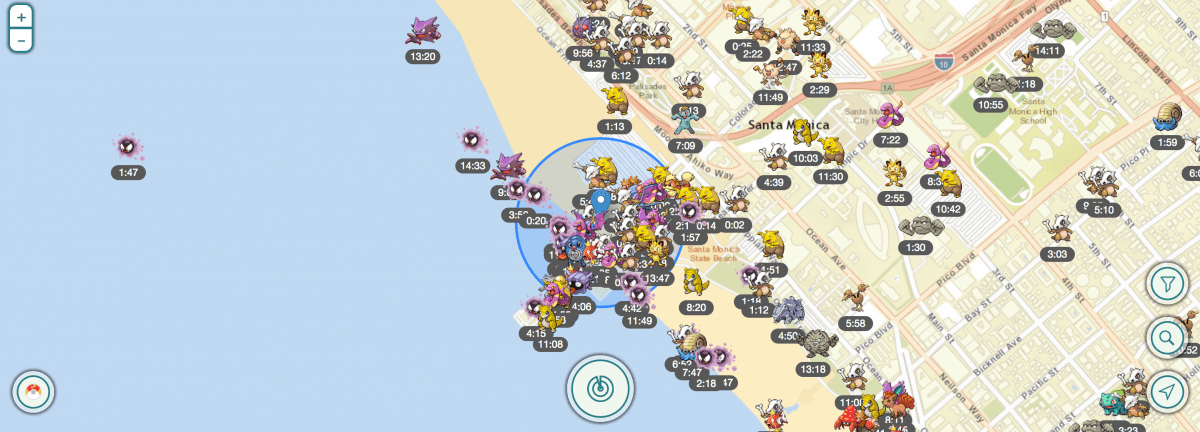
Pokemon GO scanners worked between 2016 and 2017 by polling Niantic’s API endpoints with thousands of fake accounts and aggregating the results into a community-visible map. Niantic shut down the relevant API endpoints in August 2016, sued the operators of the largest scanners through 2017 to 2018, and added cryptographic protocol changes that broke every subsequent scanner project.
Three things make scanner revival impractical. First, the API is now session-token-protected and rate-limited per device, making large-scale scraping infeasible. Second, Niantic’s anti-cheat (the Vital Edge and Halios systems combined) detects abnormal account behavior including scanner-style polling patterns. Third, the legal exposure for operators is well-established; the major scanner operators settled in the seven-figure range, and would-be successors have not emerged. The combination effectively ended the scanner ecosystem.
What the official Niantic tools cover
Niantic added official features through 2018 to 2024 that cover most of what trackers were used for. Nearby radar shows up to nine nearby Pokemon with proximity indicators. Routes (added) lets you trace walking routes and earn rewards. Field Research tasks at PokeStops give predictable, specific Pokemon. Raid alerts notify you about local raid opportunities. Pokemon GO Plus + at $44.99 handles background catching and PokeStop spinning during walks.
The big change from the scanner era is that Niantic now bakes ‘spawns where you are walking’ into the game’s core design. The expectation is that you walk to find Pokemon, not that you teleport to coordinates a scanner showed you. The game’s design has shifted to reward exploration over completionist coordinate-checking.
Compliant community tools
A few third-party tools work within Niantic’s Terms of Service and remain useful. GoMap.gg is a community-driven map of static POIs (PokeStops, Gyms, Routes) that does not show real-time spawns; the data comes from voluntary user submissions through Niantic’s Wayfarer system. Silph Road’s Travelers Field Reports aggregate community observations of seasonal spawn rates and event-specific data without violating the API.
The PokeBattler raid simulator helps plan raid teams without violating any rules. Pokebattler’s Friends list optimizer recommends gifting and battle-friend connections to grow lucky-friend chains. All of these read public game-state data without scraping. Other Android games worth playing sit alongside Pokemon GO.
Quick take
Scanners are gone. The legitimate replacement is the in-game Nearby radar plus Routes, the Pokemon GO Plus accessory, and the compliant community tools (GoMap.gg, Silph Road, Pokebattler). Spoofing and autowalk apps are bannable.
Pokemon GO Plus and Plus Plus
The official Niantic hardware accessories handle the background-catching the scanners promised. Pokemon GO Plus + at $44.99 (the second-generation device) catches Pokemon and spins PokeStops automatically while you walk, syncs to your phone over Bluetooth, and supports Pokemon Sleep tracking too. The original Pokemon GO Plus is discontinued; aftermarket third-party clones (Pokeball Plus, Auto Catch IV, Go-tcha) all work but lack the Niantic-blessed sync.
For casual players, the Pokemon GO Plus + is the single best accessory. It does most of what scanner-using players wanted (passive catching during walks) without any ToS risk.
Anti-cheat enforcement
Niantic’s anti-cheat issues three-tier punishments: seven-day shadowban for first detection, thirty-day for second, permanent for third. Detection covers GPS spoofing, autowalk apps, modified APKs, scanner-style polling patterns, and abnormal click-rate behavior. The detection is reliable enough that operating any cheat tool is a question of when you get banned, not if.
Players who used scanners to 2018 and stopped before the bans do not need to worry; the enforcement is for current behavior, not historical. Players running scanner-style tools are in the high-risk zone.
If you really want to know where Pokemon spawn
Three legitimate ways. First, walk to where you already know spawns happen (parks, malls, urban centers with high PokeStop density). The Niantic Wayfarer system ensures these places are accurately listed. Second, watch the official Niantic events page; community days, spotlight hours, and seasonal events have predictable spawn rules. Third, use the Field Research and Special Research questlines to earn specific Pokemon through gameplay.
None of these are as fast as a scanner would have been. They are also the only legitimate paths and they have the advantage of not getting your account permanently banned.
At a glance
| What you wanted from scanners | Legitimate alternative |
|---|---|
| See nearby Pokemon | Nearby radar + Routes (built-in) |
| Auto-catch while walking | Pokemon GO Plus + ($44.99) |
| Plan raids by location | Pokebattler raid simulator |
| Map of PokeStops and Gyms | GoMap.gg (static POI map) |
| Community spawn data | Silph Road Travelers Field Reports |
| Spoof location to far places | Not legitimate; bans escalate fast |
FAQ
Are any Pokemon GO scanners still operational?
A handful of low-quality scanner-revival projects exist but they are unreliable and using them risks an account ban. Niantic’s API changes and anti-cheat updates have made the scanner approach effectively non-viable for 2026.
Will I get banned for using a third-party map?
Depends on the map. GoMap.gg shows static POIs from voluntary user submissions and does not violate ToS. Maps that show real-time spawns are using the Pokemon GO API in violation of ToS and using them puts your account at risk.
Is the Pokemon GO Plus + worth it?
Yes for most players. The auto-catching and auto-spinning during walks adds up to substantially more progress with less screen time. At $44.99 it pays back within a couple of months of active play.
Can I check what raids are happening near me?
Yes through the in-game Nearby tab, which shows current raids within a few hundred meters. For broader visibility, the Silph Road Travelers Field Reports cover regional raid trends. Community Discord servers in most cities aggregate raid hosting in real time.
What about spoofing for travel?
Spoofing is explicitly forbidden in the Terms of Service. The most common rationale (playing in a different country during travel) is interesting but still bannable. The legitimate alternative is in-game features like the Lucky Buddy, Special Research, and the regional-Pokemon trading that lets you collect regional Pokemon through legitimate trades.
How can I tell if I’ve been shadowbanned?
Symptoms: rare and shiny Pokemon do not appear in your spawns, Gym defenders log fewer coins, your account shows fewer event rewards. The shadowban typically lasts seven days for first offenses. Stop the bannable behavior immediately to avoid escalation.
The verdict
Pokemon GO scanners belong to the 2016-2017 era of the game’s history and have not been viable since. The legitimate replacement is the combination of in-game features (Nearby, Routes, Field Research), official Niantic accessories (Pokemon GO Plus +), and compliant community tools (GoMap.gg, Silph Road, Pokebattler). Together they cover most of what scanner-using players actually wanted.
For players still tempted by scanner-revival projects or spoofing tools, the anti-cheat enforcement makes the risk equation lopsided. The temporary ban escalates to permanent quickly, and the data loss on a high-level account is permanent. Play the game legitimately or do not play it.
How we put this guide together
Reviewed the current state of every named scanner project active 2016 to 2018 (PokeVision, Pokesniper, PokeGo++, FastPokemap) during April 2026; none are operational with current Niantic API behavior. Anti-cheat enforcement timing observed through the public Niantic Help Center policies and community-reported ban waves through 2024 to 2026. Legitimate tool evaluations include hands-on use of GoMap.gg, Silph Road Travelers Field Reports, and Pokebattler during May 2026.