
In This Article
Follow BestForAndroid


Short answer: Minesweeper, Solitaire, Snake, Pong, Pac-Man, Chess and Hangman all hold up because they nailed one job: be fun in seconds. No accounts, no tutorials, no learning curve. Better still, every one of them plays free today in a browser or on Android, so nostalgia costs nothing.
A snake made of green squares once lived on hundreds of millions of Nokia phones, and people still talk about it. That is the strange power of early games. They had almost nothing to work with, so they spent everything they had on the one thing that mattered, which was being fun the second you started.
Before photorealistic worlds and forty-hour campaigns, a game had to grab you with a couple of rules and a clear goal. The hardware left no room for filler. What survived that constraint is a short list of titles that still feel sharp on a modern screen, and a lot of them came bundled with the machines our families already owned: old Windows PCs, the first home consoles, and feature phones that fit in a coat pocket.
Here are seven of them, what made each one matter, and exactly where you can play it right now without dusting off any old hardware.

What actually makes a game “retro”?
Retro is less about age and more about how a game was put together. Early machines were tight on memory and processing power, so designers could not lean on cinematics or sprawling systems. They had to make the core loop carry the whole experience.
The result is a recognizable feel. Simple controls. A goal you grasp in one glance. No account to create, no tutorial to sit through, no slow climb before the fun starts. You press a button and you are playing. That instant accessibility is the thread running through every game below. Here is the quick version of the seven, side by side.
| Game | Platform era | Why it still holds up |
|---|---|---|
| Minesweeper | Early Windows PC | Pure logic and risk; one wrong click ends the run |
| Solitaire | Early graphical Windows | Instant rules, satisfying wins, deals again in seconds |
| Snake | Nokia feature phones | Four directions, a growing tail, a curve you set yourself |
| Pong | Early-arcade-era Atari cabinet | Two paddles and a ball that turns tense fast |
| Pac-Man | Early-eighties Namco cabinet | A maze with personality and patterns to crack |
| Chess | Board game on early PCs | Endless depth with a difficulty you can actually beat |
| Hangman | Pen-and-paper, then home computers | Spelling, deduction and a little luck |
1. Minesweeper
- Why it matters: a pure test of logic and risk under pressure.
- Where it lived: bundled with an early version of Windows by Microsoft, later ported far beyond it.
- Genre: logic puzzle.
- Its legacy: it quietly taught a generation to read probability while teaching them to use a mouse.
Minesweeper arrived on the desktop after a run in the Microsoft Entertainment Pack, then shipped with an early Windows release in place of the card game Reversi. It looked like a grid of grey squares. Underneath it was a small lesson in deduction: every number tells you how many mines touch that tile, and the whole board becomes solvable if you read the clues carefully instead of clicking on instinct.
That tension is why it never aged out. One wrong click ends the run, so you learn to weigh the odds, flag the squares you trust, and only gamble when the board leaves you no choice. It is calm and nerve-wracking at the same time, which is a rare combination.
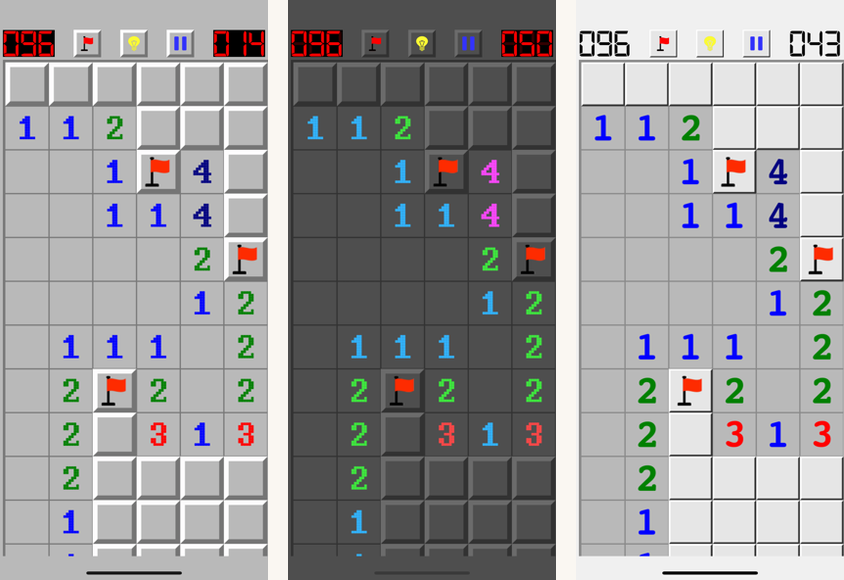
How to play it now: free browser versions of Minesweeper run in any modern tab, and several faithful Android apps bring the same grid to your phone with bigger, finger-friendly tiles.
2. Solitaire
- Why it matters: for many people, the first game they ever played on a computer.
- Where it lived: bundled with an early graphical version of Windows by Microsoft.
- Genre: card strategy.
- Its legacy: it taught the world to drag and drop with a mouse.
Klondike Solitaire was not just a time-killer. Microsoft included it to teach a brand-new gesture: clicking and dragging a card across the screen felt awkward to first-time mouse users, and a stack of cards was the friendliest way to practice. Millions learned the mouse one move at a time without ever realizing they were in a lesson.
Strip away the tutorial purpose and the game still works. The rules are immediate, a winnable deal feels satisfying, and a dead end is over fast enough to deal again. It is the definition of pick up and play, which is exactly why it outlived the machines it shipped on.

How to play it now: modern Solitaire collections run free across browsers and mobile, including the Microsoft Solitaire Collection on Android, many with daily challenges and leaderboards layered on top of the classic Klondike deal.
3. Snake
- Why it matters: the game that put real gaming in everyone’s pocket.
- Where it lived: preloaded on Nokia feature phones, where it became a worldwide habit.
- Genre: arcade puzzle.
- Its legacy: proof that a phone could be a games machine.
The snake idea did not start on a phone. According to Wikipedia, the genre traces back to an early arcade game called Blockade, where players left a growing trail and tried not to crash into it. Home versions, including Atari’s Surround, carried the concept into living rooms long before it found its most famous home.
That home was the Nokia feature phone, where a stripped-down version called Snake shipped preloaded and turned dead time into a tiny obsession. It rode along on roughly 350 million Nokia handsets, by most counts the most widely distributed game of its era, and for a huge number of people it was the first video game they ever owned. You can also see why it stuck: four directions, one growing tail, and a difficulty curve you build yourself by surviving. Snake helped prove a phone could be more than a phone, a point our roundup of mobile gaming picks up from there.

How to play it now: dozens of free Snake clones live in the browser and on the Play Store, and many keep the original four-way, grid-locked feel rather than smoothing it into something modern.
4. Pong
- Why it matters: the game that proved people would pay to play.
- Where it lived: an Atari arcade cabinet from the early arcade era, later ported almost everywhere.
- Genre: action.
- Its legacy: it helped launch the commercial video game industry.
Two paddles, a square ball, and a beep. Pong is about as simple as a game can get, and that simplicity was the point. It is often miscredited as the very first table-tennis video game, but the Magnavox Odyssey’s Table Tennis actually came first. According to Wikipedia, Pong was instead the first commercially successful arcade table-tennis game, the one that packed bars and arcades and showed the world there was real money in video games.
It also quietly invented the idea of sitting across from a friend and competing on a screen. The ball speeds up, your reflexes scramble to keep pace, and a casual rally turns tense in seconds. Every competitive game that followed owes something to that little bouncing dot.
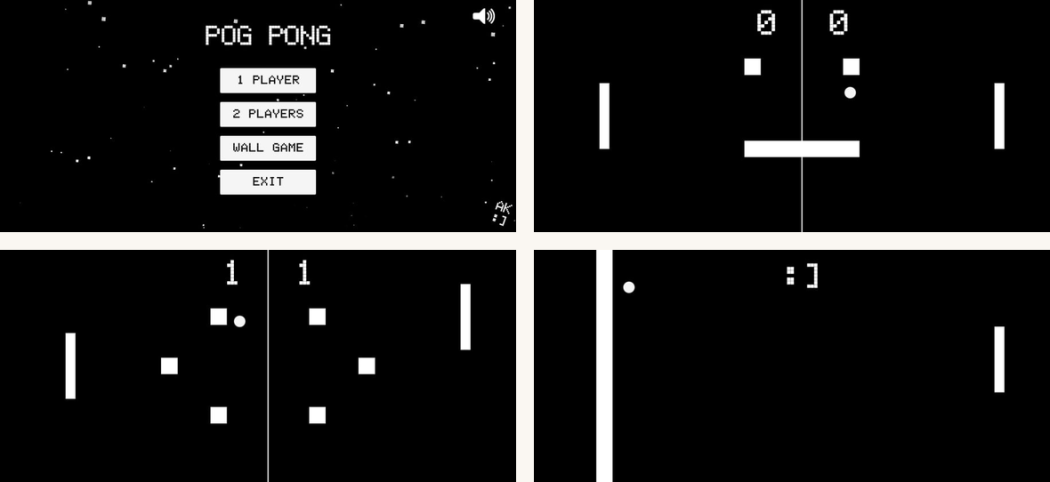
How to play it now: faithful Pong recreations run in the browser and as free Android apps, and most keep local two-player mode so you can still hand the phone back and forth.
5. Pac-Man
- Why it matters: arcade strategy disguised as a chase.
- Where it lived: a Namco arcade cabinet from the early-eighties arcade boom, ported to almost every platform since.
- Genre: maze action.
- Its legacy: one of the most recognizable characters in all of gaming.
Pac-Man took the arcade out of the realm of shooting and racing and made a maze feel urgent. You clear dots while four ghosts hunt you, each with its own personality and pattern, and the only way to win consistently is to read those patterns and use the power pellets at the right moment to flip the chase around.
It earned its place in history at the cash box, too. The original cabinet became one of the highest-grossing arcade games ever built, with Wikipedia citing estimates of over 14 billion in lifetime revenue, and that yellow circle went on to sell merchandise, cartoons and sequels for decades. Not bad for a character built from a pizza with a slice missing.

How to play it now: official and fan-made Pac-Man games run free in browsers and on Android, with touch controls that swap the old joystick for a swipe.
6. Chess
- Why it matters: the deepest pure-strategy game on this list.
- Where it lived: a board game that early PCs turned into a digital opponent.
- Genre: strategy.
- Its legacy: more than fifteen centuries of continuous play and counting.
Chess is the outlier here, an ancient game that computers gave a second life. Its roots reach back through chaturanga in India across more than fifteen centuries, which makes it older than every other entry on this list combined. Early home machines turned it into something new: an opponent that never got tired, never gloated, and could be dialed down to a level you could actually beat.
That adjustable difficulty is what made digital chess so good for learning. A patient beginner could practice against a gentle engine, then crank it up as their reading of the board improved. The depth was always there; the computer just made the on-ramp gentle.

How to play it now: free chess apps and browser sites let you play graded AI opponents, work through puzzles, or match real players online whenever you want a longer think.
7. Hangman
- Why it matters: the word game that doubled as a vocabulary teacher.
- Where it lived: a pen-and-paper classic adapted to early home computers and school software.
- Genre: word puzzle.
- Its legacy: a staple of classrooms and rainy-day boredom for generations.
Hangman started on the back of a notebook long before it reached a screen, and it made the jump to early home computers and educational software almost untouched. The rules are the whole charm: guess letters to fill in a hidden word, and a wrong guess inches a little stick figure closer to the gallows. Run out of guesses and the word wins.
Under the simple loop is a real workout. You weigh letter frequency, lean on common patterns, and learn to open with vowels and the usual suspects before risking a rare consonant. That mix of spelling, deduction and a touch of luck is why teachers kept reaching for it and why it still slots neatly onto a touchscreen.

How to play it now: plenty of free Hangman apps and browser games keep the format intact, often with themed word lists for kids, travel, or sport if you want a fresh challenge.
Where to play retro games right now
The best part of this list is how little stands between you and a quick game. Most of these classics run straight in a browser tab, no emulator, no old hardware, no setup. You open a page and you are playing.
For the rest, the Play Store is full of small, faithful Android ports that fit the touchscreen without bloating the original idea. Stick to apps with strong ratings and a clear privacy policy, skip anything that demands odd permissions for a card game, and you will have a pocketful of classics that load faster than most modern menus.
Why these old games still make sense
Modern games are loud. Notifications, battle passes, daily logins, and tutorials that run longer than some films. Retro games ask for none of that. You sit down, you understand the rules at a glance, and you make progress immediately, which is a relief after a long day of screens shouting for attention.
There is a practical side to that calm. Lower cognitive load and clear, instant progress are part of why short, simple games can take the edge off stress rather than add to it. The reasons these titles endured are the same reasons they still earn a spot on a phone: clean ideas, instant access, and the confidence to be small.