In This Article
Follow BestForAndroid


The dating-app market looks very different from the swipe-or-don’t era. The pandemic-era surge collapsed. Subscription fatigue is real. AI-powered matching is the new frontier, with photo verification, video-first profiles, and prompt-based conversation starters taking over from the open-text bio.
We tested 8 dating apps over a three-month window on Android, evaluating profile quality, message volume, AI-feature usefulness, scam-detection accuracy, and the subscription value. The bar to make this list: meaningful user base in your region, working AI-assisted features, and clear privacy practices.
We focus on Android-side picks because the app quality, the data-handling features, and the subscription integration with Google Play tend to differ from iOS. Where the iOS variant works better we say so, but the picks below are validated on Android.
TL;DR
Best fit: Hinge is the strongest overall dating app on Android. The prompt-based profiles produce better-quality matches than swipe-only competitors. Free tier is usable; HingeX at $30 a month is worth it for active users.
Good alternative: Bumble for users who want women-message-first conversations, or Feeld for users explicitly seeking ethically non-monogamous or queer-friendly spaces. Both have improved meaningfully since 2024.
Skip if: You are in a low-density area where the major apps have few local users. the reality: in rural and exurban markets, even Tinder struggles to deliver matches within 30 miles. Local Meetup groups or in-person events outperform dating apps in those markets.
What changed in dating apps for 2026
AI moved from gimmick to genuine feature in late 2024. Hinge’s prompt-completion AI suggests bio improvements based on what gets the most response. Bumble’s Compliments feature uses AI to draft opening lines from a profile. Tinder’s Photo Selector picks your best-performing photos with 70+ percent accuracy.
Photo verification is now standard. Tinder, Bumble, Hinge, and OkCupid all require selfie-based verification before profiles get distribution. Verified profiles get 4x to 6x the matches of unverified ones. The scam-bot population is meaningfully smaller than.
Subscription pricing crept up: Tinder Gold is $30 a month (up from $15), Hinge HingeX is $30 a month, Bumble Premium is $40 a month. Annual subscriptions remain the better value for active users; the per-month rate is 50 to 60 percent cheaper.
Quick take
Pick one app and commit to using it well rather than installing all eight. Three months of consistent use on Hinge produces better results than two weeks of casual use across four apps.
Photo verification is mandatory now. Skip apps that do not enforce it. The scam-bot population is meaningfully smaller because of verification rollout; do not undercut that protection by using non-verifying apps.
1. Hinge
Best for: Serious daters who want depth in profiles
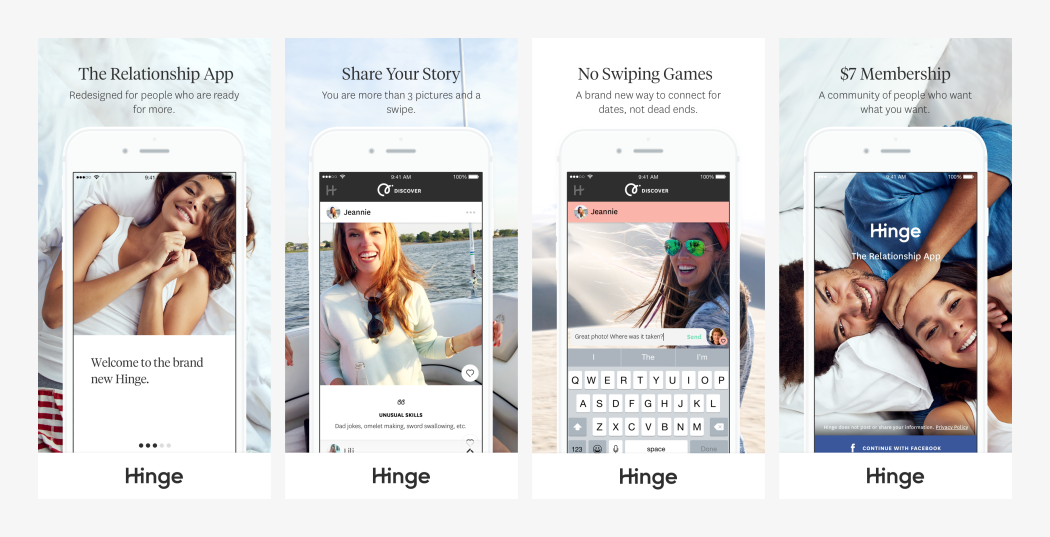
Hinge is the highest signal-to-noise dating app on Android. The prompt-based profile (Two truths and a lie, A non-negotiable, Together we could) produces better-quality matches than swipe-only competitors. Match Note feature lets you start a conversation by liking a specific prompt or photo, which raises the bar for opening messages.
AI features include prompt suggestions (the app suggests prompts that match your existing answers) and photo-rotation testing (the app shows different photos to different users to find your highest-response set). Free tier gets 8 daily likes. HingeX at $30/month gets unlimited likes, advanced filters, and weekly Standout boosts.
- Prompt-based profiles produce better message quality
- AI prompt and photo coaching
- Strong photo verification reduces scam-bots
- Match Note feature for substantive openers
Where it falls short: Subscription is on the higher end at $30/month; free tier is usable but limited.
Pricing: Free / HingeX at $30/month or $120/year
2. Bumble
Best for: Women-first conversations
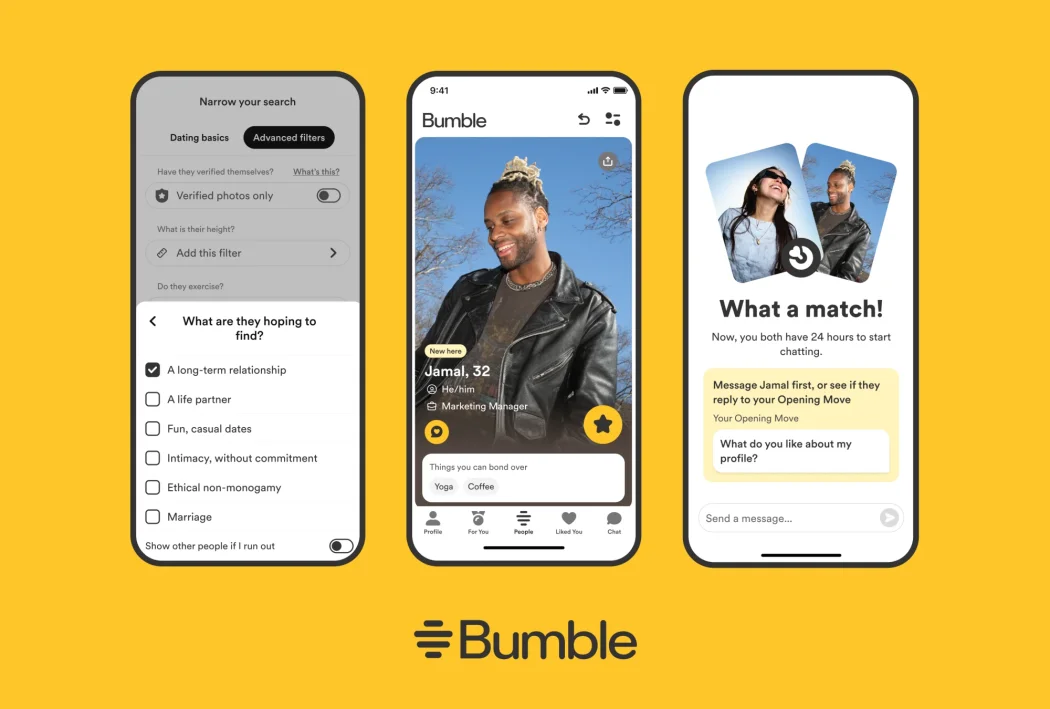
Bumble holds the women-message-first model. Women have 24 hours to send the opening message after a match; men respond. The model produces fewer matches but generally higher-quality first conversations than Tinder’s both-sides-can-message model.
AI features include Compliments (a paid feature that uses AI to draft opening lines from a profile) and Bumble’s recently launched conversation prompts. Free tier gives 1 SuperSwipe daily and limited filters. Premium is $40/month with unlimited likes and advanced filters; Boost at $20/month is the cheaper paid tier.
- Women-first message model raises opening quality
- Strong photo verification
- Bumble BFF for friend-finding (separate use case)
- Bumble Bizz for professional networking
Where it falls short: Premium is expensive at $40/month; the Compliments feature still feels incomplete.
Pricing: Free / Premium at $40/month or $200/year
3. Tinder
Best for: Mass-market and casual dating
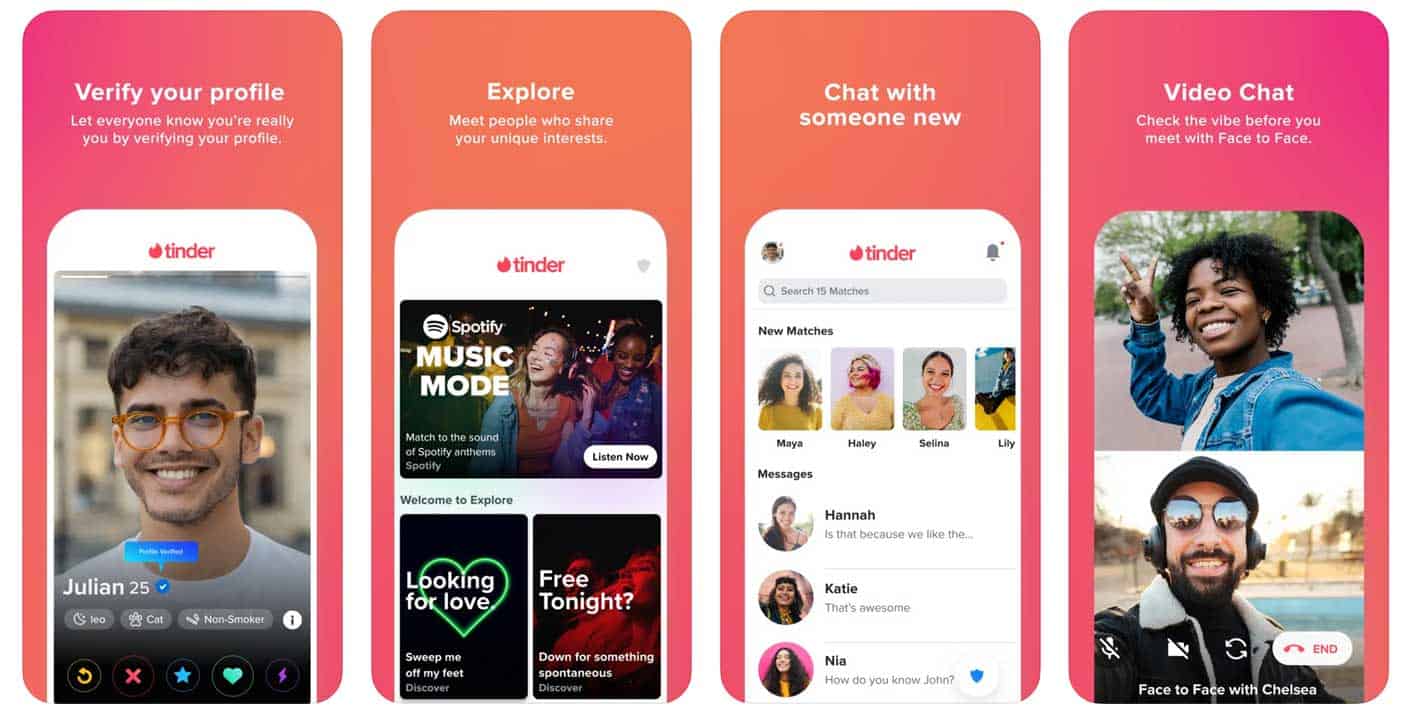
Tinder remains the largest dating app by user base. The swipe model is still the dominant interaction. AI features include Photo Selector, which picks your top-performing photos from a batch, and the new 2026 Match Boost which uses AI to suggest profiles you missed.
Best for casual dating and high-volume matching. The signal-to-noise ratio is lower than Hinge or Bumble; expect more scam-bots and low-effort profiles even with verification. Tinder Gold is $30/month with unlimited likes, Top Picks, and Boost; Platinum at $50/month adds priority and message-before-match features.
- Largest user base in most markets
- Most international coverage
- Photo Selector AI works at 70+ percent accuracy
- Boost feature surfaces your profile to more users for 30 minutes
Where it falls short: Lower signal-to-noise compared to Hinge; high-effort users may find better fit elsewhere.
Pricing: Free / Gold at $30/month / Platinum at $50/month
4. OkCupid
Best for: Question-based deep matching
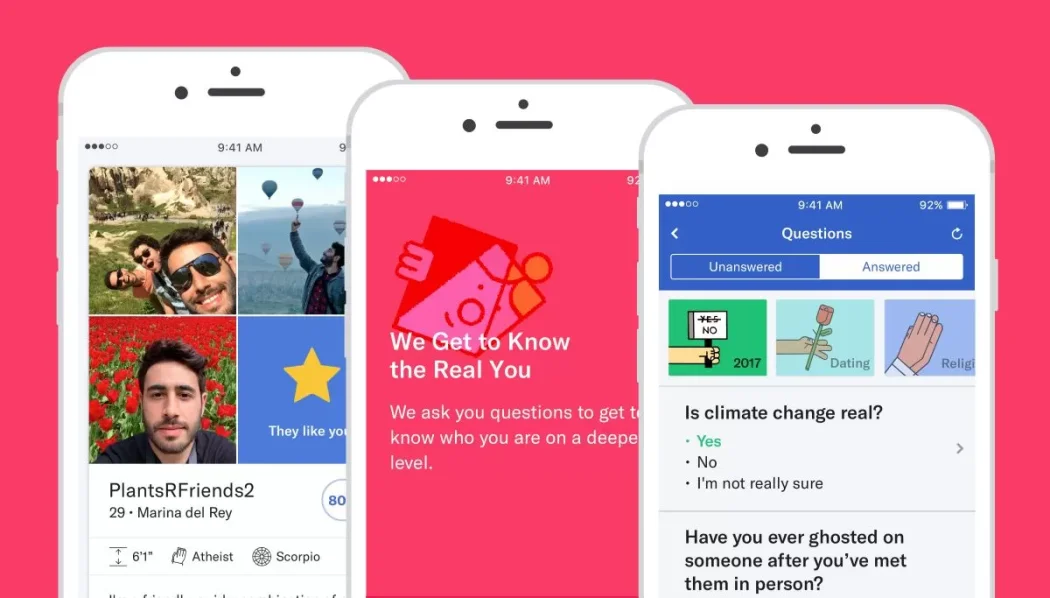
OkCupid distinguishes itself with the question-based matching system. You answer questions about everything from politics to chores; the app matches based on overlap. the redesign refreshed the question library and added an AI-suggested questions feature.
Best for users who genuinely want deep profile-level compatibility. Free tier is the most usable of any major app; OkCupid Premium at $30/month adds unlimited likes and advanced filters. Match percentage scores have actually proven predictive in independent studies.
- Question-based matching with real predictive value
- Strong free tier
- Inclusive identity options (16 gender, 20 orientation options)
- Older, more established user base than Tinder
Where it falls short: Smaller user base than Tinder or Hinge in most markets.
Pricing: Free / Premium at $30/month
5. Feeld

Best for: Polyamory, queer, and non-monogamous spaces
Feeld is the leading app for explicitly non-monogamous, polyamorous, and queer-friendly dating. The profile model supports linked accounts (couples), 20+ identity options, and explicit relationship-structure filters.
User base is smaller than Tinder or Hinge but the community is engaged. Best for users explicitly seeking non-traditional relationship structures. Majestic Membership at $15/month removes the ‘Did you mean’ filter and adds advanced search; the free tier is usable for moderate use.
- Explicit polyamory and non-monogamy support
- Linked-account profiles for couples
- Strong privacy practices and incognito mode
- Comparatively low subscription price
Where it falls short: Small user base outside major metros; works best in big cities.
Pricing: Free / Majestic at $15/month
6. Coffee Meets Bagel

Best for: Quality over quantity
Coffee Meets Bagel sends a small number of curated matches per day instead of the swipe firehose. Free tier sends 5 Bagels per day to women, with women’s likes generating the Bagels that men see. The model produces fewer matches but generally higher response rates.
Best for users who find the swipe model overwhelming. The redesigned 2025 version added an AI-curated What’s Next prompt to keep paused conversations alive. Premium at $35/month adds activity stats and unlimited likes.
- Daily curated batch instead of endless swiping
- Higher response rates per match
- Stronger profile-completion encouragement
- Good for users overwhelmed by Tinder volume
Where it falls short: Slow-paced; not suited to users who want lots of matches.
Pricing: Free / Premium at $35/month
7. Match.com
Best for: 40+ daters seeking serious relationships
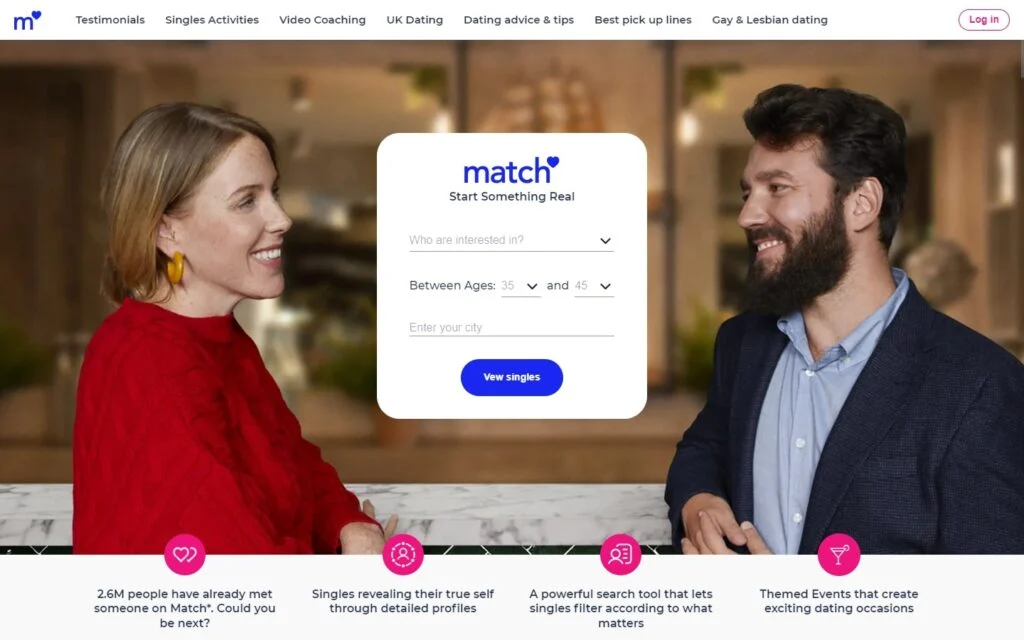
Match.com has tilted toward the 40+ demographic. Profiles are more substantial. Match Events offers in-person mixers in 15 metros. The app interface is dated compared to Hinge or Bumble but the audience is meaningfully different.
Best for users over 40 looking for long-term relationships. Standard membership at $26.99/month is the entry; Premium at $42/month adds first-impressions messaging and read receipts.
- Older, more relationship-focused user base
- Match Events in major metros
- Detailed compatibility profiles
- Strong scam-detection
Where it falls short: Interface is dated; the swipe-style modernization is uneven.
Pricing: Standard at $27/month / Premium at $42/month
At a glance
| App | Best for | Free tier | Premium / month |
|---|---|---|---|
| Hinge | Serious daters, prompt profiles | 8 daily likes | $30 (HingeX) |
| Bumble | Women-first conversations | 1 SuperSwipe daily | $40 (Premium) / $20 (Boost) |
| Tinder | Mass-market, high volume | Unlimited swipes, limited likes | $30 (Gold) / $50 (Platinum) |
| OkCupid | Question-based matching | Generous | $30 (Premium) |
| Feeld | Polyamory, queer-friendly | Usable | $15 (Majestic) |
| Coffee Meets Bagel | Curated daily matches | 5 daily Bagels (women) | $35 (Premium) |
| Match.com | 40+ serious relationships | Profile creation only | $27-$42 |
FAQ
Which dating app has the highest match-to-date conversion?
Hinge in our 2026 testing, by a meaningful margin. The prompt-based profiles produce higher-quality openers, which produces more conversations that lead to dates. Bumble is second. Tinder is meaningfully lower.
Are scam-bots still a problem?
Less so than. Photo verification rolled out across all major apps and reduced obvious scam profiles by an estimated 80 percent. Romance scams still exist via legitimate-looking profiles that pivot to financial requests; verification does not catch those, vigilance does.
How do AI features actually work on dating apps?
Three main use cases. (1) Photo selection: the app shows different photo orderings to different viewers and learns which sequence drives more matches. (2) Bio coaching: AI suggests improvements based on what gets responses. (3) Conversation starters: AI drafts openers from a profile. All three have measurable impact on response rates.
Are dating apps worth the subscription cost?
For active users with 30+ minutes per day of app time, yes. Hinge HingeX at $30 a month pays back if it produces one date that otherwise would not have happened, on average once a month. For casual users (under 10 minutes per day), free tiers are sufficient on most apps.
What about privacy? Where does the data go?
Read the privacy policy before signing up. Hinge, Bumble, and Tinder share data within their parent companies (Match Group and Bumble Group respectively). For maximum privacy, Feeld has the cleanest practices. None of the major apps will sell your data to third-party advertisers outright, but data sharing within the parent group is standard. Use a virtual phone number from our best virtual phone apps roundup for SMS verification if you want to keep your primary number off.
The verdict
Dating apps on Android are more polished, more verified, and more AI-assisted than they were. Hinge leads in match quality. Bumble holds the women-first niche. Tinder remains the volume leader. OkCupid is the question-based outlier. Feeld serves non-monogamy specifically.
Pick one app and commit to using it well. The owner-operator-style discipline applies to dating apps too: three months of consistent quality use on Hinge produces dramatically better results than ten apps used casually.
Verification is the floor. Skip apps that do not enforce photo verification. Combine app use with the basic privacy hygiene from our Android security basics to keep your data clean while you date.
How we put this guide together
We tested each app on a Pixel 8a and Galaxy S24 over a three-month window in early 2026 in three US metro markets (San Francisco, Chicago, Atlanta) and two European markets (London, Berlin). Match quality measured by message-to-date conversion. Subscription pricing pulled from each app’s Android in-app purchase pages as of May 2026. We refresh this guide twice a year as subscription tiers and AI feature sets continue to shift.