In This Article
Follow BestForAndroid


Disclosure: Notta provided a Memo unit for this review. BestForAndroid was not paid for coverage and Notta did not see the piece before it ran. The verdict, the criticisms, and the fact we corrected its own spec sheet are all ours.
Short answer: The Notta Memo is a 28g, card-sized AI voice recorder that clips to your phone, records calls and in-person meetings, then syncs to an app that transcribes and summarizes them. Notta claims near 98 percent accuracy across 58 languages, and in clean rooms it holds up. At $149 it is a smart buy for people who live in back-to-back meetings, as long as you handle consent honestly. One caveat worth knowing up front: its battery does about five hours of continuous recording per charge, not the 30 hours the spec sheet implies.
If your brain has been running like a browser with 78 tabs open lately, you are in good company. Between video calls, phone calls, brainstorms, and the occasional kitchen-table strategy session, keeping track of who said what, and what you were supposed to do about it, gets genuinely hard.
That is the gap the Notta Memo aims at. It is a tiny, under-one-ounce voice recorder from the Japanese AI company Notta that behaves less like a gadget and more like a quiet assistant. It listens, records, and then transcribes the parts that matter, whether you are on a call, sitting in a meeting, or just thinking out loud on a walk.
Think of it as a notetaker that never gets bored. You do not type anything, and it holds on to the detail you would otherwise forget by lunch. I have been carrying one for a few weeks, and below is the honest picture: what it nails, what its own spec sheet gets wrong, and the privacy homework nobody hands you in the box.
Notta Memo specifications
Specs only tell you so much, but a couple of numbers here matter more than the rest. The Memo is genuinely card-sized and weighs 28 grams, about the same as five nickels, so it disappears into a wallet or a jacket pocket. Inside sit four MEMS microphones plus a bone-conduction mic, which is the part that lets it pull phone calls off the vibration of your own jaw rather than fishing them out of the air. The one line I would not take at face value is the battery row, so I have corrected it below and explained why under the battery section.
| Spec | Detail |
|---|---|
| Price | $149 USD (roughly GBP 139 in the UK) |
| Size | 3.39 x 2.17 x 0.14 in (86.1 x 55.1 x 3.5 mm) |
| Weight | 0.99 oz (28g), about five nickels |
| Microphones | 4 MEMS mics plus 1 bone-conduction mic; recommended pickup up to 10 ft (3 m) |
| Battery | 470mAh, up to roughly 5 hours of continuous recording, 28 days standby |
| Charging | Magnetic cable, about 1.5 hours to full |
| Storage | 32GB onboard, enough to hold up to roughly 2,000 hours of recordings offline |
| Transcription | Notta cites near 98 percent accuracy across 58 languages (in-app) |
| Connectivity | Bluetooth and Wi-Fi sync to the Notta app |
Design and everyday handling

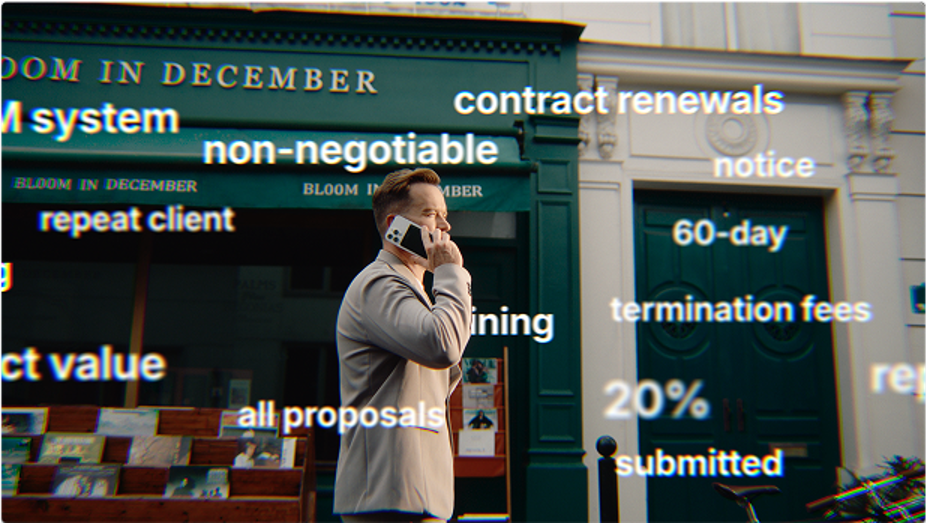
The hardware story is mostly about restraint. There is no screen, no blinking light show, no pairing ritual. A single physical switch sets the mode: flick it up for phone calls, down for in-person, then press and hold to start. That is the entire learning curve. The bone-conduction mic is the clever bit, since it records a call through vibration, so the person on the other end comes through cleanly even when the room around you is not quiet.
When a session ends, the Memo syncs to the Notta app on your phone or laptop, and that is where the work actually happens. You get the full transcript, a summary, chapter markers, and a chat assistant that can pull decisions and follow-ups across several meetings at once. The recorder is the easy half; the app is what you are really buying.
Transcription accuracy, and where it slips
Accuracy is the whole game for a device like this, so it is worth being precise. Notta says the Memo hits near 98 percent transcription accuracy and around 98.8 percent on speaker identification, across 58 languages. Those are the vendor’s figures, not an independent lab result, so treat them as a strong claim rather than gospel. In my own use, in a normal room with one or two speakers, it lands close enough that cleanup is a quick skim rather than a rewrite.
The honest caveat is what happens at the edges. Heavy accents, people talking over each other, and cafe-level background noise all chip away at the result, and that matches what independent reviewers have found across this category. If your meetings are crosstalk in a loud open office, budget time to proofread the transcript before you forward it to anyone.
| Recording conditions | What to expect |
|---|---|
| Quiet room, one or two speakers | Close to the claimed accuracy; cleanup is a quick skim |
| Phone call via bone conduction | Clear capture of your side even in a noisy space |
| Heavy accents or fast crosstalk | More slips; proofread before sharing |
| Cafe or open-office background noise | Accuracy drops; expect to fix names and numbers |
Battery and storage, set straight
Here is the one spec that needs correcting, because the marketing copy blurs two very different numbers. The 470mAh battery delivers up to about five hours of continuous recording on a charge, plus around 28 days of standby. That is real-world runtime, and it is fine for a day of meetings if you top up overnight.
The much bigger figure you will see, roughly 30 hours and up, is not battery life at all. It is offline storage capacity: the 32GB onboard can bank up to about 2,000 hours of audio that waits to sync the next time you are online. Runtime is how long it can record before it needs a charge; storage is how much it can hold. Conflating the two is an easy way to be disappointed on a long travel day, so plan around the five-hour recording window and let the storage take care of itself.
Privacy, consent, and the part nobody warns you about

Notta leans on a serious-sounding stack of credentials, and it lists HIPAA, GDPR, ISO 27001, SOC 2 Type II, and CCPA compliance. Those are reasonable claims for a company selling into businesses, but they are Notta’s claims, so I would frame them as the company saying its handling meets those standards rather than a flat promise that your data is safe. Compliance certificates describe how a vendor stores audio; they do not decide whether you were allowed to record it in the first place.
That second part is the one buyers skip. An always-on recorder runs straight into consent law. Plenty of states, including California, Illinois, Florida, and Washington, require every party to agree before a private conversation can be recorded, so a one-sided tap of the switch can be illegal where you live. Illinois goes a step further: its Biometric Information Privacy Act treats a voiceprint as biometric data, which means speaker-identification features can carry their own legal weight. None of that makes the Memo a bad device. It just means the responsible move is to tell people they are being recorded before you press and hold.
Who the Notta Memo is for
This is a tool for people whose day is mostly talking. Students recording lectures, journalists capturing interviews, consultants in back-to-back client calls, and managers who would rather follow a conversation than scribble through it will all get real value. The cross-platform reach helps here too, since it syncs across iOS, Android, desktop, and Chrome without much fuss.
It is a weaker fit if your recording needs are occasional. If you capture a voice memo once a fortnight, your phone already does that for free, and the Memo’s strengths, the bone-conduction call recording and the app’s summaries, only pay off when you lean on them often. This is a frequent-recorder’s gadget, not a just-in-case one.
| If you are a | Why the Memo fits |
|---|---|
| Student | Capture full lectures, then search the transcript at exam time |
| Journalist or researcher | Clean interview audio plus a summary you can quote from |
| Consultant or manager | Follow the conversation while the app writes the action items |
| Occasional note-taker | Skip it; your phone’s voice memo already covers you |
The verdict
After a few weeks of carrying it, the Notta Memo is an easy device to recommend to the right person. It is tiny, the call recording genuinely works, and the app turns a pile of audio into something you can actually use. The things that hold me back are honest ones rather than dealbreakers:
| Verdict | The short version |
|---|---|
| What we love | Bone-conduction call recording, a genuinely useful app, true pocketable size |
| What to watch | Accuracy slips in noise, about five hours of recording, consent is your job |
| Best for | Anyone who lives in meetings and records often, at $149 |
- Phone-call recording is the standout, thanks to bone conduction that stays clear even in noisy rooms
- The app is the real product: summaries, action items, searchable transcripts, and cross-meeting chat
- The form factor is genuinely pocketable, a thin card with a magnetic case that snaps onto a phone
- Accuracy is strong in clean rooms but slips with accents, crosstalk, and background noise
- Battery is about five hours of recording, so heavy travel days want a power bank
- Consent is on you: an always-on recorder needs honest disclosure to stay on the right side of the law
At $149, the Memo earns its place for anyone who lives in meetings and wants the detail captured without doing the typing. If that is you, you can read the full feature list and buy it directly from Notta’s official website.
How it compares
The Memo is not arriving alone. It sits inside a wider wave of pocket AI recorders, with Anker’s Soundcore Work and others chasing the same desk space. Its closest rival is the Plaud Note, another card-shaped recorder that pairs hardware with an AI transcription app, so the choice between them often comes down to which app’s summaries you prefer and how each handles your languages. It is also worth remembering that the phone in your pocket is a competitor now: Tom’s Guide recently tested the AI transcription tools head to head on flagship phones, and they are closing the gap. The Memo’s argument is the dedicated hardware, the bone-conduction call capture, and a switch you flip without unlocking anything.