In This Article
Follow BestForAndroid


Study apps on Android changed character between 2024 and 2026. Anki and Quizlet still anchor the category, but on-device AI features rebuilt the next tier (Notion AI, Goodnotes 6 AI handwriting, Notebooks LM for source-grounded study), and the AI tutoring layer (Khan Academy’s Khanmigo, the new Wolfram Alpha Step-by-Step AI) finally feels useful instead of intrusive.
We tested ten study apps across Pixel 8, Galaxy S24, and a Galaxy Tab S9 for two months across an academic semester. Each pick names the subject strength, the AI integration, and the pricing.
Skim the at-a-glance table for the picks that match your subject. The verdict block names the default pick for STEM students and the default pick for humanities students.
TL;DR
The pick: Anki for spaced-repetition flashcards (still the gold standard); Khan Academy’s Khanmigo for AI tutoring across most subjects; Notion AI for note-taking with on-device summarization.
Good alternative: Quizlet for crowdsourced flashcard sets; Wolfram Alpha Step-by-Step for math and physics; Goodnotes 6 for handwritten notes on tablets.
Skip if: You only need a basic note-taking app. Google Keep is free, works on every device, and covers 80 percent of what most students actually need.
1. Anki (AnkiDroid)

Best for: Spaced-repetition flashcards. The gold standard for any student who needs to memorize a large body of material.
Score: 9.6/10.
Anki’s algorithm is still the best implementation of spaced repetition in any consumer app. The AnkiDroid client syncs free with the Anki desktop and the iOS app (the iOS version costs 25 USD; Android is free). Free for life on Android. The community card decks cover the major subjects (USMLE Step 1, MCAT, language learning, music theory).
It is utilitarian. The UI does not win any beauty contests. The trade-off is that the science of the algorithm is unmatched.
- The standard for spaced repetition
- Free on Android forever
- Massive community deck library
Where it falls short: UI is dense and dated. Steeper learning curve than the polished competitors.
Pricing: Free.
2. Khan Academy (with Khanmigo)

Best for: AI-tutored learning across math, science, humanities, and economics.
Score: 9.2/10.
Khan Academy’s Khanmigo AI tutor (powered by GPT-4-class models, with safety guardrails specifically tuned for students) is the strongest AI tutoring layer on Android. It walks students through problems rather than handing answers, which is the right pedagogical posture.
Free for individuals (Khanmigo subscription was bundled into the core Khan Academy account). Khan Academy itself remains free. The combination is the strongest free education stack on any platform.
- AI tutoring that walks, not solves
- Free for individuals
- Strong coverage across STEM and humanities
Where it falls short: Strong for the SAT, AP, MCAT prep traditional curriculum; weaker for less common subjects.
Pricing: Free.
3. Notion (with Notion AI)
Best for: Notes and study planning with AI summarization.
Score: 8.9/10.
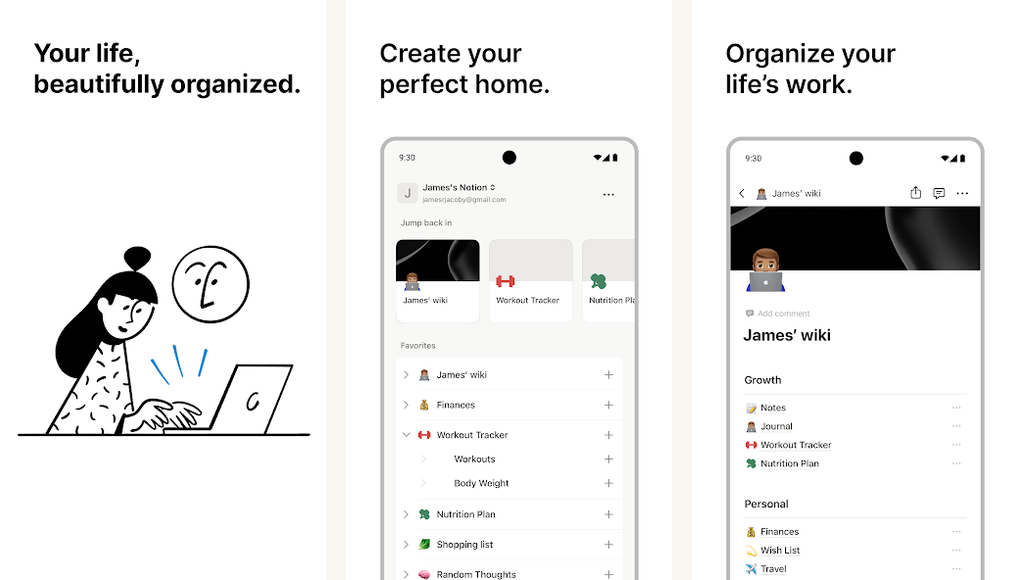
Notion is the dominant student notes platform on Android. the Notion AI rebuild added on-device summarization for short documents and cloud summarization for longer notes, both well-tuned for study material.
Free for students (Notion Education has a free tier for verified.edu accounts). Notion AI is included in the student tier through 2026 academic year.
- Strong note-taking plus study planning
- Free for students with.edu verification
- On-device AI summarization
Where it falls short: Setup investment is real; Notion rewards effort. Phone UI is functional but the tablet experience is far better.
Pricing: Free for students. Notion AI included.
4. Wolfram Alpha (with Step-by-Step AI)
Best for: Math, physics, chemistry, and engineering problem solving.
Score: 9.0/10.
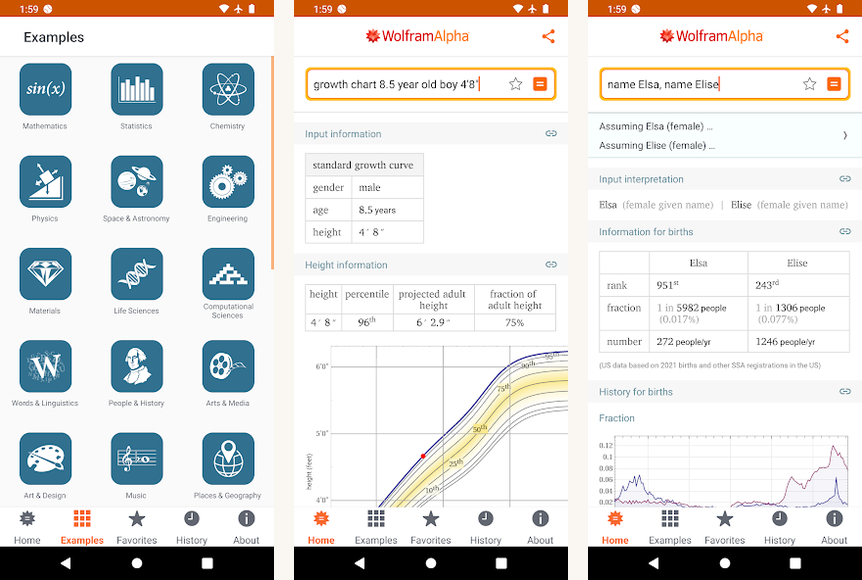
Wolfram Alpha was already the strongest computational engine for STEM students. the Step-by-Step AI added walk-through explanations for every problem, which closes the gap between getting an answer and learning how the answer comes about.
Pro subscription (5.49 USD per month for students with academic verification) unlocks Step-by-Step plus the full computational engine.
- Strongest STEM problem solver on any platform
- Step-by-Step AI walks through solutions
- Student pricing
Where it falls short: Subscription required for the differentiator features. Limited coverage outside STEM.
Pricing: Free preview. Wolfram Alpha Pro Student 5.49 USD per month.
Quick take
For STEM: Anki plus Wolfram Alpha plus Khan Academy. The free tier of this stack is the strongest STEM study set on Android.
For humanities: Notion plus Anki plus Notebooks LM. The combination handles essay structure, source citation, and flashcards better than any single app.
5. Quizlet

Best for: Crowdsourced flashcard sets and group study modes.
Score: 8.3/10.
Quizlet’s strength has always been the community library. Hundreds of thousands of pre-made study sets, especially strong on AP curriculum, USMLE prep, language vocabulary, and SAT. the update added an AI tutor mode (Quizlet Q-Chat) for free-tier users.
Free with ads. Quizlet Plus (3 USD per month student rate) unlocks Magic Notes (auto-flashcards from lecture audio), Smart Grading, and offline mode.
- Largest community flashcard library
- Q-Chat AI tutor
- Group study modes
Where it falls short: Flashcard algorithm is not as effective as Anki’s spaced repetition. Free tier has growing ad density.
Pricing: Free with ads. Quizlet Plus 3 USD per month student rate.
6. Goodnotes 6

Best for: Handwritten notes on a Galaxy Tab S9 or Pixel Tab with stylus.
Score: 8.7/10.
Goodnotes is the iOS handwriting-notes standard. The Android version (Goodnotes 6) shipped with full feature parity, plus the update adding AI handwriting-to-text conversion that actually works well on tablet handwriting.
Free trial. Goodnotes 6 Pro 9.99 USD per year unlocks unlimited notebooks.
- Handwriting-to-text conversion that works
- Feature parity with iOS version
- Cross-platform sync
Where it falls short: Best on a tablet with stylus. Phone-only use is functional but not the strength.
Pricing: Free trial. Pro 9.99 USD per year.
7. Notebooks LM (Google)

Best for: Source-grounded study where the AI sticks to your uploaded materials.
Score: 8.8/10.
Google’s Notebooks LM (renamed from NotebookLM) is the study app for students who want AI that only cites their own uploaded notes, papers, and textbooks. The AI does not invent facts outside your sources; it answers questions about your sources.
Free with a Google account. the update added audio overviews that generate a podcast-style summary of your sources.
- AI grounded in your sources only
- Free with Google account
- Audio overview podcast feature
Where it falls short: Phone UI is functional; web is better. Limited to text and PDF uploads.
Pricing: Free.
8. Forest

Best for: Focus and the Pomodoro technique with a gamified visual layer.
Score: 8.1/10.
Forest plants a virtual tree when you start a focus session. The tree grows over the session length; if you leave the app, the tree dies. The dumb-seeming mechanic actually works as a behavioral anchor for the Pomodoro technique.
One-time 2.99 USD purchase. The premium tier (8.99 USD) plants real trees through a partnership with Trees for the Future.
- Behavioral anchor that works
- One-time purchase, no subscription
- Real-tree planting on premium tier
Where it falls short: Visual layer is gimmicky for some users. Not for everyone.
Pricing: 2.99 USD one-time. Premium 8.99 USD.
9. Photomath

Best for: Quick math problem solving from a phone camera.
Score: 7.6/10.
Photomath uses your phone camera to scan a printed or handwritten math problem and walks through the solution. the Microsoft acquisition expanded the coverage from algebra into calculus, statistics, and physics.
Free for the basic solver. Photomath Plus (6.99 USD per month, 2.99 USD with student verification) unlocks step-by-step solutions across all topics.
- Strong math solver from a camera scan
- Broad subject coverage
- Microsoft acquisition stabilized the engine
Where it falls short: Subscription required for step-by-step. The solver-without-explanation pattern can be misused to skip learning.
Pricing: Free preview. Photomath Plus 2.99 USD per month student rate.
10. Microsoft OneNote

Best for: Students in the Microsoft 365 Education ecosystem.
Score: 8.0/10.
OneNote is the underrated note-taking option for students with a Microsoft 365 Education subscription. the Copilot integration adds note summarization and flashcard generation from your existing notes.
Free with a Microsoft account. Microsoft 365 Education is free for students at participating schools.
- Strong note organization with section tabs
- Copilot integration for study features
- Free for many students through M365 Edu
Where it falls short: Less polished than Notion on a phone. Stronger as a desktop-first tool.
Pricing: Free with Microsoft account.
At a glance
| App | Best for | AI feature | Pricing | Score |
|---|---|---|---|---|
| Anki (AnkiDroid) | Spaced repetition | None (algorithm is the point) | Free | 9.6 |
| Khan Academy + Khanmigo | AI tutoring | Khanmigo tutor | Free | 9.2 |
| Wolfram Alpha | STEM problem solving | Step-by-Step AI | Free / $5.49 mo student | 9.0 |
| Notion + AI | Notes + planning | On-device summarization | Free for students | 8.9 |
| Notebooks LM | Source-grounded study | Source-grounded AI | Free | 8.8 |
| Goodnotes 6 | Handwritten notes | Handwriting to text | Free / $9.99 yr | 8.7 |
| Quizlet | Crowdsourced flashcards | Q-Chat tutor | Free / $3 mo student | 8.3 |
| Forest | Focus / Pomodoro | None | $2.99 once | 8.1 |
FAQ
Is Anki really still the best despite all the AI flashcard apps?
Yes. The spaced-repetition algorithm is what does the work, and Anki’s implementation has 20 years of refinement. Quizlet’s Smart Grading is the closest competitor and lags Anki on retention in user-published studies.
Will AI tutors hurt my learning?
Depends on use. Khanmigo and Wolfram Alpha Step-by-Step both walk through solutions rather than just providing answers, which is the pedagogically sound posture. Photomath’s free tier giving you the answer without explanation is the worst pattern; using it to check your work is fine, using it to skip the work is not.
How do I verify my.edu status for student pricing?
Most apps use SheerID or a similar third-party verification. Upload a current student ID, transcript, or enrollment letter. Quizlet, Notion, and Wolfram Alpha all use this flow. Verification typically completes within 24 hours.
What’s the difference between Notion AI and ChatGPT for studying?
Notion AI works inside your notes and is grounded in your content. ChatGPT is general-purpose and pulls from the broader web. Notion AI is better for summarizing what you have written; ChatGPT is better for clarifying concepts you have not encountered before.
Are study apps a privacy concern for my schoolwork?
Google’s Notebooks LM and Microsoft OneNote (under M365 Education) operate under educational privacy frameworks (FERPA in the US, similar in the EU). Notion under the student tier carries the same. Be more careful with smaller-publisher apps; review the privacy policy.
The verdict
The stack matters more than any single app. The strongest combination for STEM students is Anki plus Wolfram Alpha plus Khan Academy, all free. For humanities students, Notion plus Anki plus Notebooks LM. Either combination is genuinely the strongest free-or-near-free study stack ever available to students.
Add Goodnotes 6 if you have a tablet with stylus. Add Photomath only if you understand the discipline of using it to check work rather than skip work. Skip the maximalist all-in-one study apps; the focused tools at the top of this list are stronger than any bundle.
How we put this guide together
We tested each app across an academic semester (January to April 2026) on Pixel 8, Galaxy S24, and a Galaxy Tab S9. Test cases included USMLE Step 1 flashcards for Anki, AP Physics problems for Wolfram Alpha, AP US History note-taking for Notion, and a research paper synthesis exercise for Notebooks LM. AI feature accuracy compared against textbook-correct answers on sample problems.