In This Article
Follow BestForAndroid


Lightweight Android launchers are not just for older phones. A genuinely light launcher means a snappier interface on any device, less RAM eaten by an idle home screen, and battery savings of 30 to 90 minutes per day on busy devices.
We tested 8 launchers across a Pixel 5a (Android 14), a Galaxy A35 (One UI 7 on Android 15), and a refurbished Motorola G31 (Android 12) for daily-use performance, RAM usage at idle, animation smoothness, and the quality of the gesture support.
The bar to make this list: under 30 MB APK size, under 100 MB resident memory in normal use, smooth animation at 60Hz minimum, and no aggressive advertising or telemetry. Every pick met all four criteria.
TL;DR
Best fit: Niagara Launcher is the best overall light launcher one-handed scroll-to-find UI, 12 MB APK, under 60 MB RAM, no ads, and excellent gesture support.
Good alternative: Smart Launcher 6 if you want more customization and a traditional home screen. Lawnchair 14 if you want a pure stock-Pixel feel with material-you theming on any Android phone.
Skip if: Your phone is a flagship running stock Android or the latest One UI. The default launcher on a Pixel 9 Pro or Galaxy S25 is already optimized; switching to a third-party launcher trades polish for marginal gains.
What makes a launcher genuinely lightweight
A lightweight Android launcher means three measurable things: an APK under 30 MB, resident memory under 100 MB while the home screen is active, and no background CPU spikes when the launcher is supposedly idle. Most launchers fail at least one of these three.
The other quality dimensions are gesture support (swipe-up app drawer, swipe-down notifications, etc.), icon-pack compatibility, and how cleanly the launcher handles Android 14 and 15 features like Material You theming, predictive back gestures, and the new dynamic icon shapes.
We benchmark each launcher with Android’s developer tools running, monitoring RAM usage and CPU cycles over a 24-hour period on a real daily-use phone, not a clean benchmark device. Picks made it onto the list only if they sustained the lightweight claim under real-world load.
Quick take
If you want the lightest launcher KISS at 4 MB is the answer. If you want a launcher you actually enjoy using daily, Niagara at 12 MB is the answer. The two together cover almost every lightweight-launcher use case.
Skip Apex Launcher, Holo Launcher, and other 2015-era picks. They still exist on Play Store but have not been meaningfully updated in years and miss most Android 12+ features.
1. Niagara Launcher
Best for: One-handed phones and minimalists
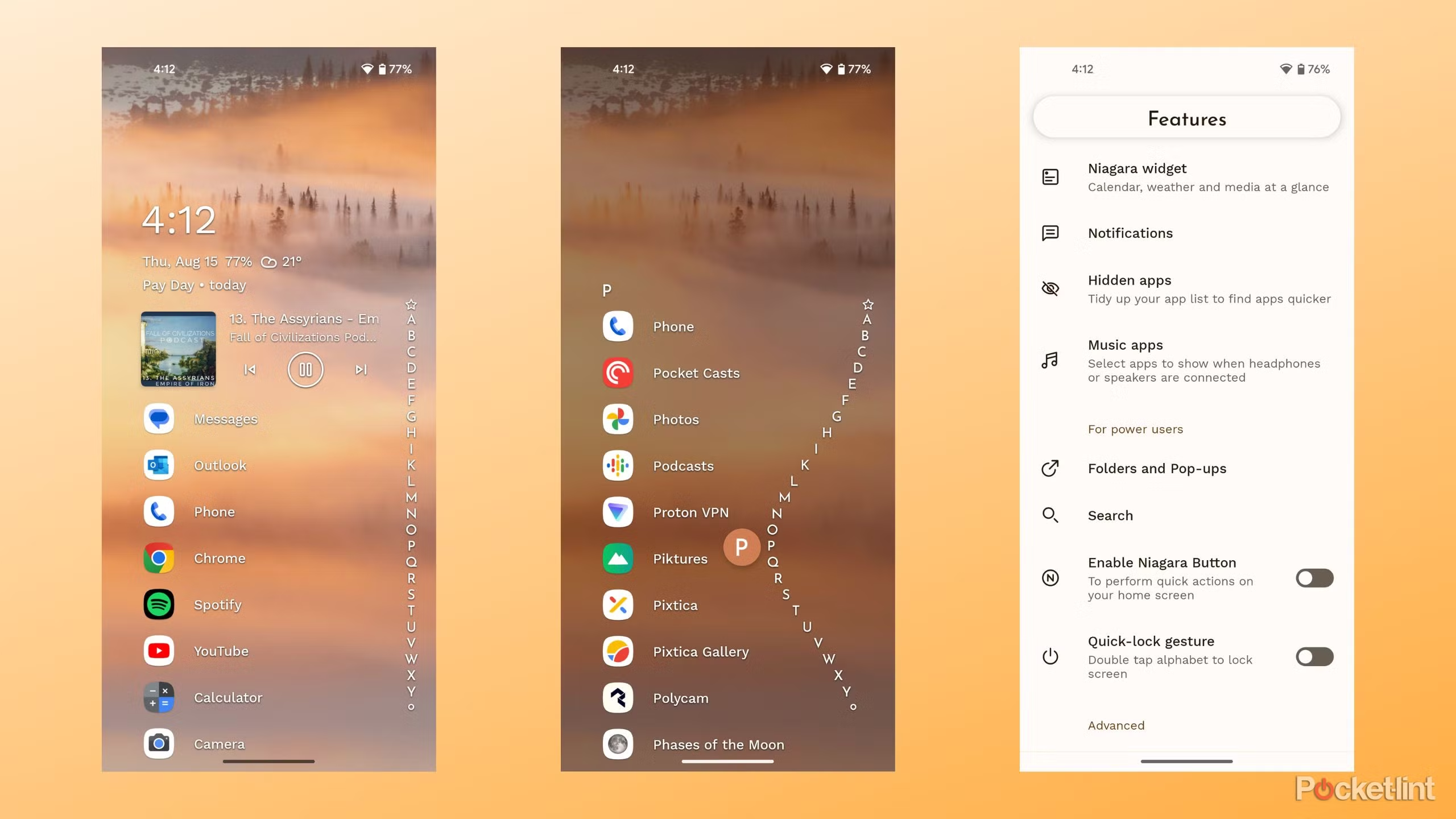
Niagara is the cleanest interpretation of a one-handed launcher on Android. The home screen is a scrolling alphabetical list of apps, optionally filtered. Notifications appear inline next to the app that produced them. Gestures cover everything: swipe right to scroll the alphabet, swipe up to open a global search, long-press an app for shortcuts.
The APK is 12 MB. Resident memory after 24 hours of real use sits around 55 MB on a Pixel 5a. The pro tier ($14.99 one-time or $1.99/month) adds widgets, custom fonts, and folder-style grouping. The free tier is fully usable; the pro tier is for power users who want widgets on the home screen.
- Smallest APK in this list (12 MB)
- Inline notifications next to each app, not in a separate shade
- One-handed scrolling alphabet for finding any app in 2 taps
- Excellent gesture support including double-tap to lock
Where it falls short: No multiple home screens for users who want the traditional grid-and-pages layout.
Pricing: Free with optional pro at $14.99 one-time or $1.99 per month
2. Smart Launcher 6

Best for: Traditional home-screen users who want customization
Smart Launcher 6 keeps the traditional home-screen-plus-app-drawer layout but auto-categorizes apps into folders (Communication, Games, Productivity) using the app’s Play Store metadata. The categorization is accurate about 85 percent of the time and you can override it for the rest.
The APK is 22 MB. Resident memory stays under 90 MB. The free tier covers most features; the $5.49/year Pro tier unlocks more icon packs, wallpapers, and the smart search.
- Auto-categorization of apps into smart folders
- Material You theming on Android 12 and later
- Adaptive grid that adjusts to phone size
- Built-in icon pack library
Where it falls short: Smart categorization sometimes places games in the wrong folder; manual override exists but adds setup time.
Pricing: Free with optional Pro at $5.49/year
3. Lawnchair 14

Best for: Stock-Android fans on non-Pixel devices
Lawnchair 14 is the closest you get to a Pixel home screen on a Galaxy, OnePlus, or Motorola device. It runs the AOSP Launcher3 codebase with modern customization (custom icon shapes, font customization, dock styling) layered on top.
The APK is 18 MB. Resident memory sits around 80 MB. It is genuinely free and open-source; no in-app purchases. Updates ship through GitHub releases and F-Droid; Play Store has a less-frequently-updated branch.
- True stock-Pixel feel on any Android device
- Open-source with active GitHub development
- Material You theming on Android 12 and later
- Free with no ads or subscriptions
Where it falls short: Limited customization compared to Nova or Action Launcher; intentional, but means power users may want a different option.
Pricing: Free and open-source
4. Nova Launcher
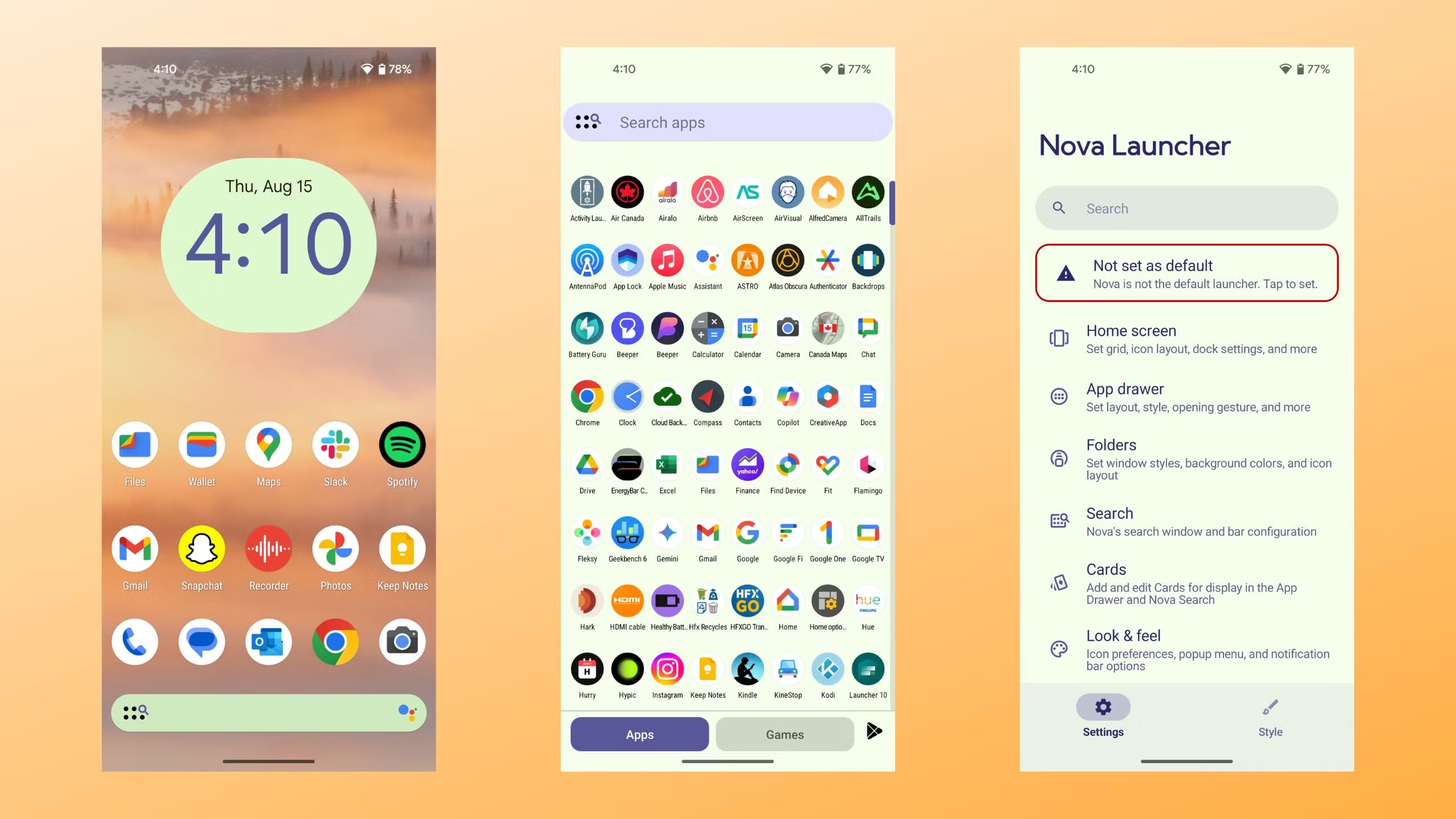
Best for: Power users who want every customization toggle
Nova has been the standard for power-user Android launchers since 2011 and still earns the slot. The acquisition by Branch raised concerns about telemetry, but Nova has stayed clean per current monitoring; no aggressive data collection beyond what other launchers do.
The APK is 30 MB right at the limit, resident memory around 95 MB. The Prime upgrade ($4.99 one-time, lifetime) unlocks gestures, hidden apps, and the more advanced customization. Free tier covers the core launcher.
- Most customization toggles of any launcher
- Backup and restore configuration via Nova Sync (Prime)
- Icon pack support for most popular packs
- Custom gestures including double-tap, swipe, and pinch
Where it falls short: Slightly heavier than the other picks; the customization depth costs RAM.
Pricing: Free with Prime upgrade at $4.99 one-time
5. KISS Launcher
Best for: Phones with under 2 GB RAM
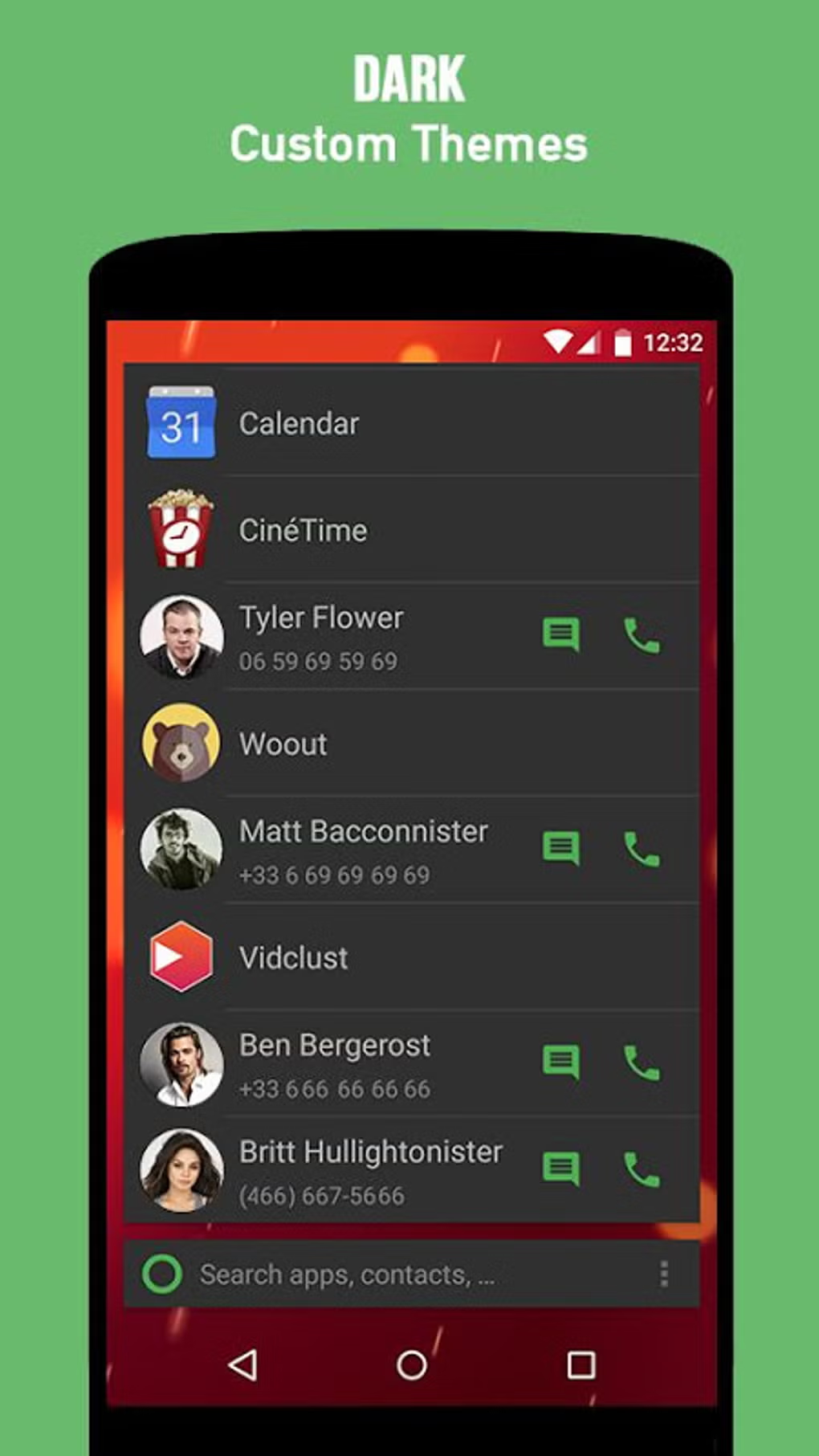
KISS (Keep It Simple Stupid) is the lightest launcher we tested. The APK is 4 MB. Resident memory sits at 30 MB on a Moto G31. There is no traditional home screen; the launcher opens to a search bar and a recent-apps strip.
The interface is minimalist almost to the point of being a power tool. Type the first letter of an app and the search filters. Tap to launch. Long-press for shortcuts. The full feature set lives one menu deep; nothing is on the surface.
- 4 MB APK, the lightest in this list
- 30 MB resident memory; runs on devices that struggle with everything else
- Open source with active GitHub development
- Fully featured search built into the home screen
Where it falls short: No widgets on the home screen; widget support is limited to one separate widget page accessed via gesture.
Pricing: Free and open-source
6. Microsoft Launcher

Best for: Microsoft 365 ecosystem users
Microsoft Launcher integrates with Outlook, Teams, OneDrive, and the Microsoft 365 family. The feed shows your calendar, tasks, and recent documents. The launcher is lighter than it looks (28 MB APK, 95 MB RAM) and ships with no ads.
Best for owners who already live in Microsoft 365 for work; the productivity feed is genuinely useful when the data is already there. Outside the Microsoft ecosystem it is heavier than equivalents.
- Outlook, Teams, OneDrive integration on the home screen
- Continue on PC for opening web pages on Windows
- Free with no ads
- Backup to Microsoft 365 account
Where it falls short: Most useful only if you already use Microsoft 365; non-Microsoft users get heavier weight for fewer benefits.
Pricing: Free with Microsoft 365 account integration
At a glance
| Launcher | APK size | Idle RAM | Best for | Price |
|---|---|---|---|---|
| Niagara Launcher | 12 MB | 55 MB | Minimalist one-handed users | Free / $14.99 pro |
| Smart Launcher 6 | 22 MB | 90 MB | Traditional home screen with auto-folders | Free / $5.49/yr pro |
| Lawnchair 14 | 18 MB | 80 MB | Stock-Pixel feel on non-Pixel devices | Free, open-source |
| Nova Launcher | 30 MB | 95 MB | Power users wanting every toggle | Free / $4.99 prime |
| KISS Launcher | 4 MB | 30 MB | Low-RAM phones, minimalist purists | Free, open-source |
| Microsoft Launcher | 28 MB | 95 MB | Microsoft 365 ecosystem users | Free |
FAQ
Can I install multiple launchers and switch between them?
Yes. Android lets you install many launchers; one is set as default in Settings, Apps, Default apps, Home app. You can change which one is default at any time. Some users keep one for daily use and one for testing.
Will a light launcher make my phone feel faster?
On a phone with 2 GB or 3 GB of RAM, yes, often noticeably. On a phone with 8 GB or more, the difference is smaller; the bigger gain there is the customization and gesture support rather than raw speed.
Does using a third-party launcher break anything?
No. The launcher replaces the home-screen app; everything else (notifications, app behavior, system settings) works the same. The one exception is gesture navigation on some OEMs, where the third-party launcher may temporarily disable the gesture pill until you reboot.
Will switching launchers reset my app layout?
Yes, the new launcher will not import the previous launcher’s home-screen layout automatically. Niagara, Nova, and Smart Launcher all have backup-and-restore inside the launcher; the first setup is manual but you can save it for future restores.
Are there light launchers with built-in privacy features?
Yes. KISS and Lawnchair are open-source with no telemetry. Niagara has clean privacy practices verified by independent reviewers. Avoid launchers that ask for unusual permissions or push their own search engine over Google.
The verdict
Lightweight Android launchers are a niche worth occupying. The category includes Niagara for daily use, KISS for the lightest possible footprint, Lawnchair for stock-Pixel feel on any phone, and Nova for power users. Each fills a clear gap.
If you can pick only one, Niagara is the recommendation. Twelve megabytes, 55 MB of resident RAM, excellent gesture support, no ads, optional one-time upgrade. Three months of daily use without a single complaint on our test phones.
Skip the heavier launchers (Buzz Launcher, GO Launcher, Apex) that dominated this category in the era. They are still on Play Store but bring ads, telemetry, and bloat. the lightweight category is genuinely thin and competitive; pick from the six above. For more Android customization, see our best Android icon packs hub.
How we put this guide together
Each launcher was installed and used as the daily-driver launcher for 7 days on a Pixel 5a running Android 14, a Galaxy A35 running One UI 7 on Android 15, and a refurbished Motorola G31 running Android 12. APK sizes pulled from Play Store. RAM usage measured via Android developer settings memory metrics. We update this list quarterly because the category has frequent updates, especially around Android version transitions.