In This Article
Follow BestForAndroid


Picking 15 essential Android apps means cutting the list to apps almost every user actually opens weekly. The boring categories matter more than the trendy ones: messaging, browser, password manager, photos, payments, and one good keyboard. The viral apps of any given year usually drop out of the next year’s list; the foundational apps stay.
This list assumes a new Android user setting up a phone in May 2026. Some apps come pre-installed on most phones (Chrome, Gmail, Google Photos). Others (Bitwarden, Proton Mail, Signal) you have to install. All 15 are free at the tier most users need.
Pair this list with the basic Android security setup from the editors. The combination of the right 15 apps and 20 minutes of security hygiene is what makes a phone yours rather than the default Google experience.
TL;DR
Best fit: The 15 below cover messaging, productivity, payments, security, and entertainment. Install all 15 and a new Android phone is ready for daily use.
Good alternative: For a leaner list, the top five (Signal, Bitwarden, Google Wallet, Google Photos, Firefox or Chrome) plus your bank’s app and your transit app is enough.
Skip if: You only use a phone for calls and texts; the pre-installed defaults will do, but Signal and Bitwarden are still worth the four-minute setup.
1. Signal

Best for: private, encrypted messaging that works on every phone.
Score: 10 / 10.
Signal is the gold-standard messenger. End-to-end encryption by default, no ads, no data harvesting, the same protocol that WhatsApp uses but without Meta’s business model. the username feature means you no longer have to share your phone number to start a chat. Voice and video calls are encrypted too.
Pricing: Free.
2. Bitwarden
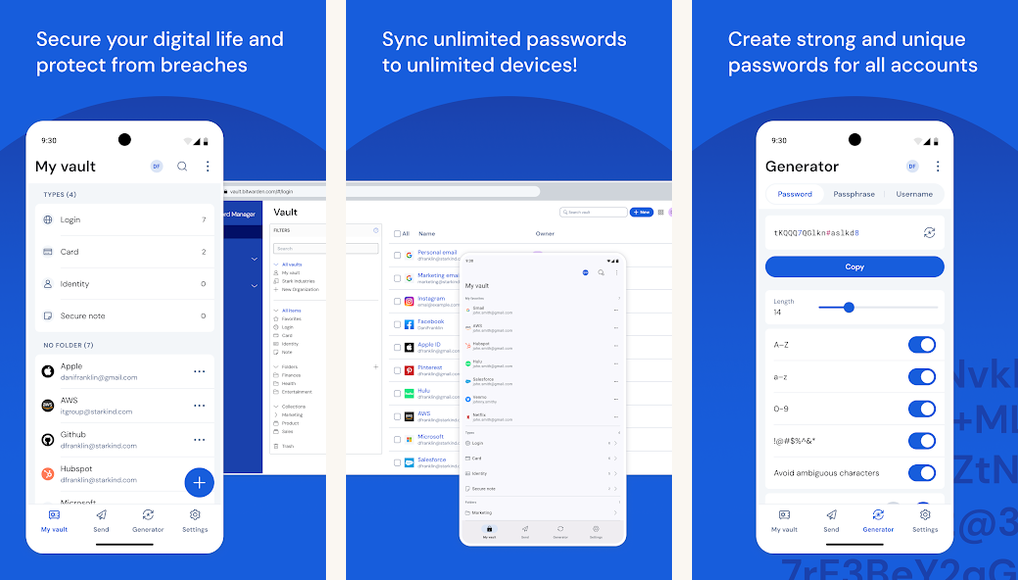
Best for: the password manager that does not lock you into one ecosystem.
Score: 9 / 10.
Bitwarden is the open-source password manager that competes with 1Password and LastPass on features while keeping a generous free tier and audited code. The Android app handles autofill, biometric unlock, and TOTP codes inside one vault. Sync to web, desktop, and browser extensions is included even on free.
Pricing: Free, Premium $10 per year, Family $40 per year.
3. Google Wallet

Best for: tap-to-pay and mobile ID where supported.
Score: 9 / 10.
Google Wallet is the default Android payment surface. the expansion added mobile driver licenses in 14 US states, more transit cards globally, and a streamlined Tap to Pay flow. Pair it with your bank’s card and you have a complete contactless wallet.
Pricing: Free.
4. Google Photos

Best for: auto-backup and AI search across your photo library.
Score: 9 / 10.
Google Photos is the most polished photo-backup app on Android. The 2025-2026 updates added a much better Magic Editor, on-device search that surfaces faces and places offline, and the Memories feed that has stopped feeling intrusive. Storage is included with your Google account up to 15 GB; Google One adds storage past that.
Pricing: 15 GB free with Google account, Google One $2 per month for 100 GB.
5. Firefox or Chrome

Best for: the browser you actually use.
Score: 8 / 10.
Chrome ships on every Android by default and is good enough for most users. Firefox is the better choice for privacy-conscious users; the Android version is the only mobile browser that supports full extensions like uBlock Origin. Pick one and use it for everything except your bank, which gets the Chrome side-tab.
Pricing: Free.
6. Proton Mail or Gmail

Best for: the email client and account stack.
Score: 8 / 10.
Gmail is the default and is genuinely excellent at filtering spam and surfacing useful messages. Proton Mail is the privacy-first alternative with end-to-end encryption between Proton users and zero-access encryption on the server. A reasonable setup: Gmail for the public address, Proton Mail for sensitive correspondence.
Pricing: Gmail free, Proton Mail free for 1 GB or $5 per month for unlimited.
7. Authy or Aegis

Best for: 2FA codes separated from your password manager.
Score: 9 / 10.
Two-factor codes belong in a dedicated app, not in your password manager (so that a breach of one does not compromise the other). Aegis is the open-source option, fully offline, encrypted backups. Authy is the polished cross-device option from Twilio if you want sync.
Pricing: Free.
8. Pocket Casts

Best for: podcasts, with the best Android UX in the category.
Score: 9 / 10.
Pocket Casts is the cleanest podcast app on Android. Variable playback speed without quality loss, trim-silence that actually works, sync across devices, OPML import and export. the Automattic acquisition kept the development team intact.
Pricing: Free, Plus $40 per year.
9. Spotify or YouTube Music

Best for: music streaming.
Score: 8 / 10.
Spotify still has the deepest catalog and the best recommendation algorithm. YouTube Music has the live performances and the music-video crossover. Both have a free tier with ads; Premium and Music Premium are both $11 per month. Pick one and stick with it; switching is annoying.
10. Gboard

Best for: the keyboard you type on all day.
Score: 9 / 10.
Gboard is the Google keyboard and ships pre-installed on most Android phones. The autocorrect is genuinely the best in the industry, glide typing works in dozens of languages, and the clipboard manager is one of the most underrated features in Android. SwiftKey is the Microsoft alternative if you prefer.
11. Google Maps

Best for: navigation and points-of-interest discovery.
Score: 8 / 10.
Google Maps is the default for a reason: the data is the most complete, the routing is the best, and the offline downloads work everywhere. Apple Maps is good now too but the Android version does not exist. Waze (Google-owned) is the alternative if you want crowd-sourced traffic and speed-camera alerts.
12. WhatsApp or Telegram

Best for: the messaging app your friends are on.
Score: 8 / 10.
WhatsApp has the global user base and end-to-end encryption (built on the Signal protocol). Telegram has the better group features and the channel ecosystem but chats are not end-to-end encrypted by default. Use WhatsApp for one-to-one chats and family groups; use Telegram for channels and special-interest groups.
13. Notion or Google Keep

Best for: notes and lists.
Score: 8 / 10.
Google Keep is the simple-and-fast option that comes pre-installed; Notion is the powerful-and-flexible option if you want databases and templates. For pure note-taking on a phone, Keep is plenty. For knowledge work that spans phone and desktop, Notion.
14. A finance app

Best for: tracking spending across accounts.
Score: 8 / 10.
Monarch Money and Copilot ($96 per year each) replaced Mint after Intuit shut it down. Both connect to most US banks and credit cards, both have clean Android apps, both let you set budgets without nagging. Monarch is the more-data-dense option; Copilot is the prettier one.
See the editors’ finance-tracker shortlist for the longer roundup.
15. A meditation or sleep app

Best for: the one wellness app most adults actually open.
Score: 8 / 10.
Headspace, Calm, and Insight Timer are the three best-known options. Insight Timer has the largest free library (50,000+ meditations and sleep sounds, no paywall on the core content). Headspace and Calm are the polished, course-led options. The actual practice matters more than the app.
Quick take
The minimum viable setup: Signal, Bitwarden, Google Wallet, Google Photos, Firefox or Chrome, Gboard, Maps, and your bank app. Eight apps, 30 minutes of setup, and the phone is ready.
The boring categories matter more than the trendy ones; the apps you open weekly for years are the ones to spend setup time on.
At a glance
| Category | Pick | Cost |
|---|---|---|
| Messaging | Signal | Free |
| Password manager | Bitwarden | Free / $10 yr |
| Payments | Google Wallet | Free |
| Photos | Google Photos | Free / $2 mo |
| Browser | Firefox or Chrome | Free |
| Gmail or Proton Mail | Free / $5 mo | |
| 2FA | Aegis or Authy | Free |
FAQ
Do I need an antivirus app on Android?
No, for most users. Google Play Protect runs on every modern Android phone and catches the malware that gets into the Play Store. The only people who genuinely benefit from a third-party antivirus are sideloaders and users on older Android versions. See the editor’s shortlist on when antivirus is actually useful.
Should I switch from Chrome to Firefox?
Worth trying if privacy matters to you. Firefox is the only Android browser with full extension support (uBlock Origin works the same as on desktop). Chrome is faster on Pixel and Galaxy phones because it is the system browser. For most users, either is fine.
What about a VPN?
Useful if you travel to countries with regional content restrictions, or if you use a lot of public Wi-Fi. Mullvad ($5 per month flat) and Proton VPN (free tier good, paid $10 per month) are the two safest options. For everyday home use, your ISP is already encrypted; a VPN is optional.
Is Google Wallet safe?
Yes. The card tokenization layer means the merchant never sees your real card number, and a stolen phone is wipe-able from any browser. See why phones are now the dominant payment surface for the full security argument.
How do I move my apps to a new phone?
Use the Android setup flow when you first boot the new device. It can restore from your Google account in 15 minutes and re-install every Play Store app. For a manual transfer, the Google Data Restore Tool and Samsung Smart Switch are both good. Bitwarden, Signal, and a few others need a manual re-login for security.
What about social media apps?
Most users already have the ones they want. The 15 above are foundational; the social apps (Instagram, TikTok, X, Threads, Bluesky) are personal preferences and the list changes too fast to recommend lists.
The verdict
The right Android app stack is largely the same as the right stack a private messenger, a password manager, a payment app, a photos app, a browser, and one good keyboard. The technology updates around them, but the categories are stable.
The biggest 2026 change is that the boring foundations got slightly better. Signal added usernames so you can chat without sharing your phone number. Google Wallet added mobile driver licenses in more states. Bitwarden’s free tier still beats most paid competitors. Google Photos shipped a Magic Editor that does not require Premium.
Install the 15 above, set up your Android security defaults, and the phone is ready for daily use. The longer tail of category-specific apps (a fitness tracker, a chess app, a daily crossword) is personal and changes year-to-year. The 15 here do not.
How we put this guide together
We tested every pick on a Pixel 8a running Android 16, a Galaxy S24 running One UI 7, and a Motorola G Stylus running Android 14 to confirm cross-OEM compatibility. App ratings come from a combination of Play Store user ratings, editorial hands-on use over four months and the strength of each app’s privacy and security posture as documented in their public privacy policies. Pricing reflects May 2026 publisher tiers.