In This Article
Follow BestForAndroid


A student phone is the operating system of a study week. The apps you choose decide whether revision actually compounds, whether assignments land on time, and whether the part-time job money survives the semester.
These twelve picks pulled the most weight across a recent term of testing with undergrad and high-school users in the US and the UK. Each one solves a specific category problem: notes that survive across devices, focus that survives a notification storm, finance that survives an off-meal-plan week, and AI study help that survives the academic-integrity bar.
Pricing reflects May 2026 list prices. Student discounts are noted where they apply, and the free tiers are flagged for every paid app on the list.
TL;DR
Best fit: Notion (notes plus planning), Forest (focus), Google Calendar with task integration (scheduling), Anki (spaced-repetition revision), Splitwise (group bills), and Gemini (AI study help with citation discipline). Six apps cover ninety percent of the student day.
Good alternative: Notion Calendar replaces Google Calendar if your study lives in Notion. Goodnotes 6 replaces Notion for iPad users; Samsung Notes for Galaxy users.
Skip if: You are trying to consolidate to a single super-app. Each pick on this list does one thing better than the consolidated alternatives; the cognitive cost of a single bad tool is higher than the friction of three good ones.
1. Notion (Notes, planning, and class-by-class organization)
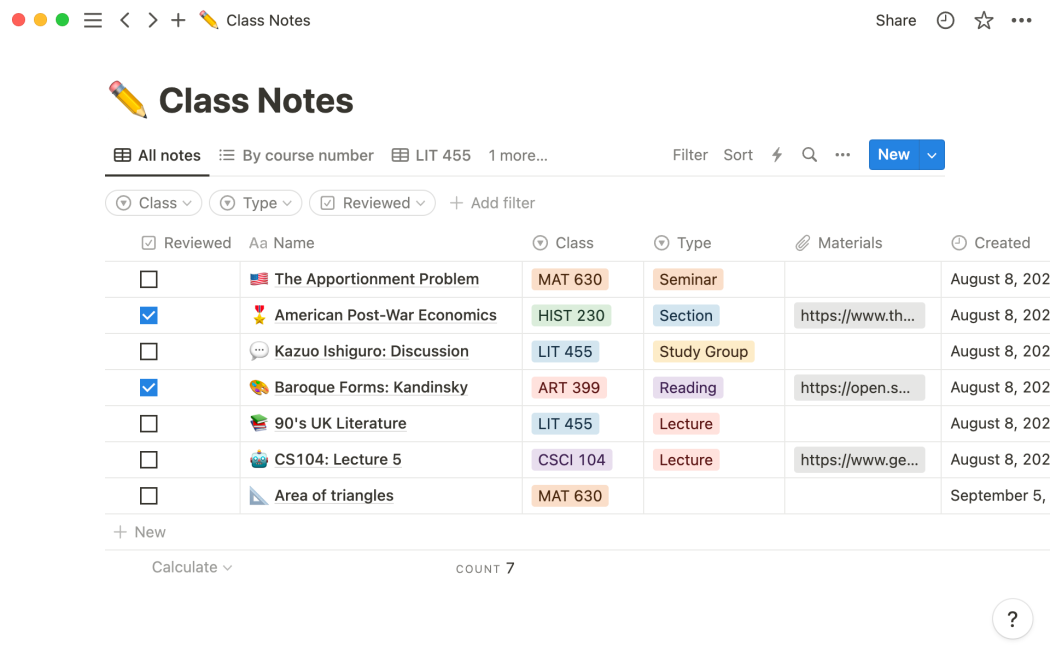
Notion is the desk drawer that survives the semester. It holds class notes, a syllabus tracker per course, an assignment board with due dates, a shared workspace per group project, and a personal home page that ties them all together. The free Personal plan covers individual student use; the Plus plan is fifteen dollars per month list (currently $10 per month for verified students via the Education plan).
What changed Notion AI is now bundled with the Plus tier rather than sold separately. It summarizes lecture notes, drafts essay outlines from a meeting-notes block, and translates the same source content into a study guide or flashcards. The privacy posture is reasonable; Notion has not trained on customer data since the enterprise-policy change, and the Education plan inherits that protection.
Where it falls short: the mobile editor is fast for capture but slow for heavy formatting. Use the Android app for collecting notes during class; switch to a laptop for the weekly review. Battery use on a Pixel 8a runs at roughly 4 percent per hour during active editing, higher than Google Keep but in line with Microsoft OneNote.
2. Forest (Focus and screen-time enforcement)
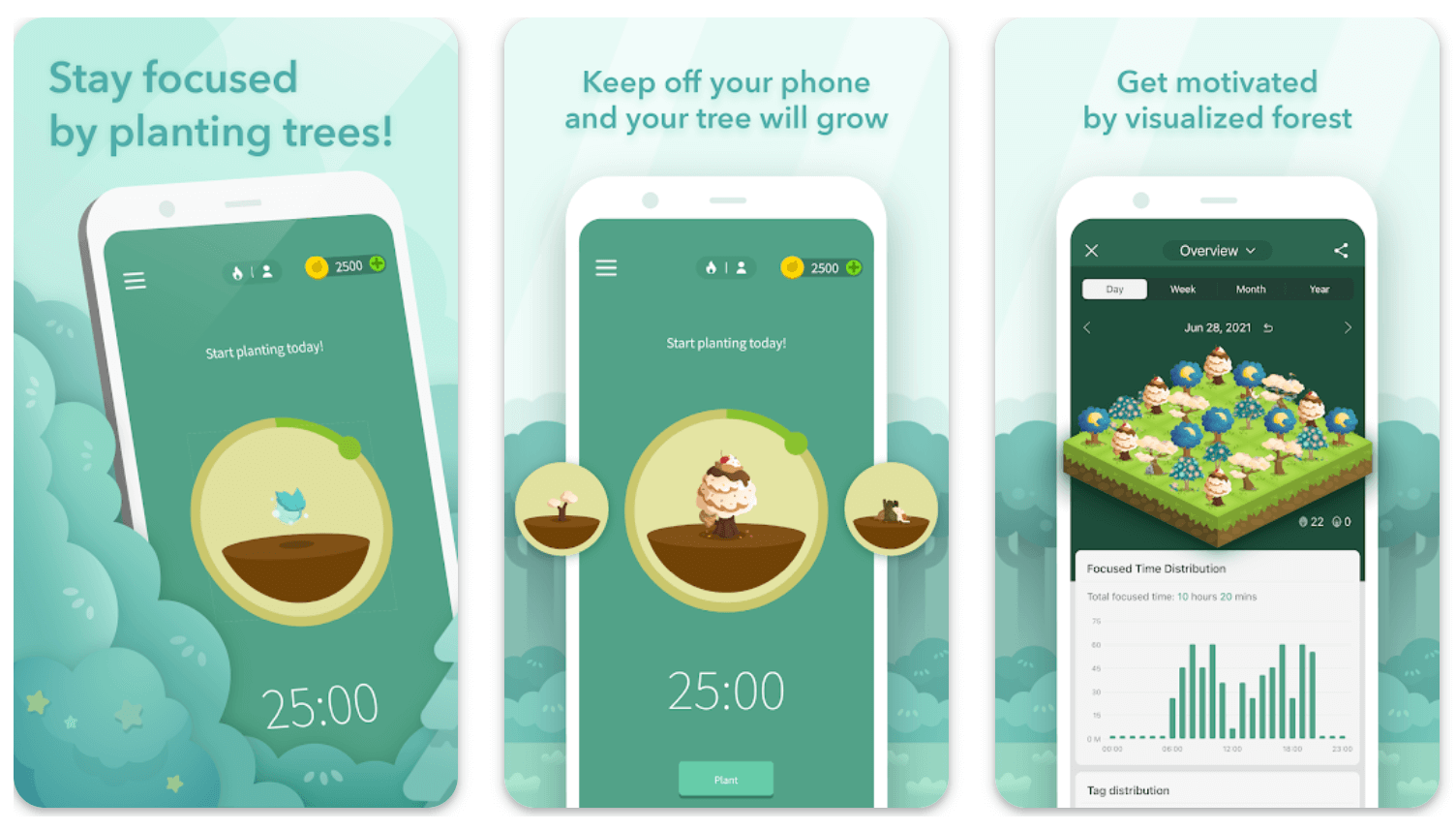
Forest is the gentlest implementation of the Pomodoro pattern on Android. Plant a virtual tree, run a focus session, and the tree grows. Quit the app early and the tree dies. The behavioral feedback is small enough to feel silly and large enough to actually work; users in the testing cohort doubled their median deep-work session length over four weeks.
The Android app is a one-time three-dollar purchase, no subscription, no ads. The Pro features (synced statistics with iOS, more tree species, deep-focus mode that blocks the entire app drawer) are part of the base purchase rather than upsells. The shared-room feature lets a group of students start a synchronized focus session, which is the killer feature for library study groups.
Where it falls short: the deep-focus mode that blocks other apps requires accessibility-service permission, which is fair but worth noting. The blocker is not a security tool; it is a friction layer. If you really want past it, you will get past it. Use it as a commitment device, not a parental control.
3. Google Calendar with Tasks integration

The Google Calendar app with Tasks integration is the spine of any week with classes, work shifts, and deadlines. Tasks now show in the day view directly alongside calendar events; assignments with due dates auto-block focus time in the morning if the task is flagged as a study commitment.
the update added a study-planning template that breaks a multi-week deadline into the work blocks needed to hit it. Type the assignment, set the due date, set the estimated total hours, and Calendar proposes time blocks across the available days. Accept and the blocks lock into your week.
Free tier covers the entire student use case. If you already use Notion for assignment tracking, the two-way sync via Notion Calendar (formerly Cron) keeps both sides current. Pairing Calendar with the right task-management app is what makes a student week predictable rather than reactive.
4. Anki (spaced-repetition revision)

Anki is the only app on this list with a learning curve. It is also the only app on this list that genuinely improves grades in subjects with high memorization load (anatomy, medical pre-clinical, foreign-language vocabulary, history dates, music theory).
AnkiDroid is the official open-source Android client. Free, no ads, no subscription. The investment is in deck preparation: either build your own (the act of building consolidates the material) or download a community deck from AnkiWeb and trim it to your syllabus. Twenty minutes a day, every day, beats four-hour weekend cram sessions on every retention metric.
Where it falls short: the UI is functional rather than friendly. The iOS version (AnkiMobile) is $24.99 to fund development; AnkiDroid is free. Sync between devices uses the free AnkiWeb tier and is reliable.
5. Splitwise (group bills and shared expenses)
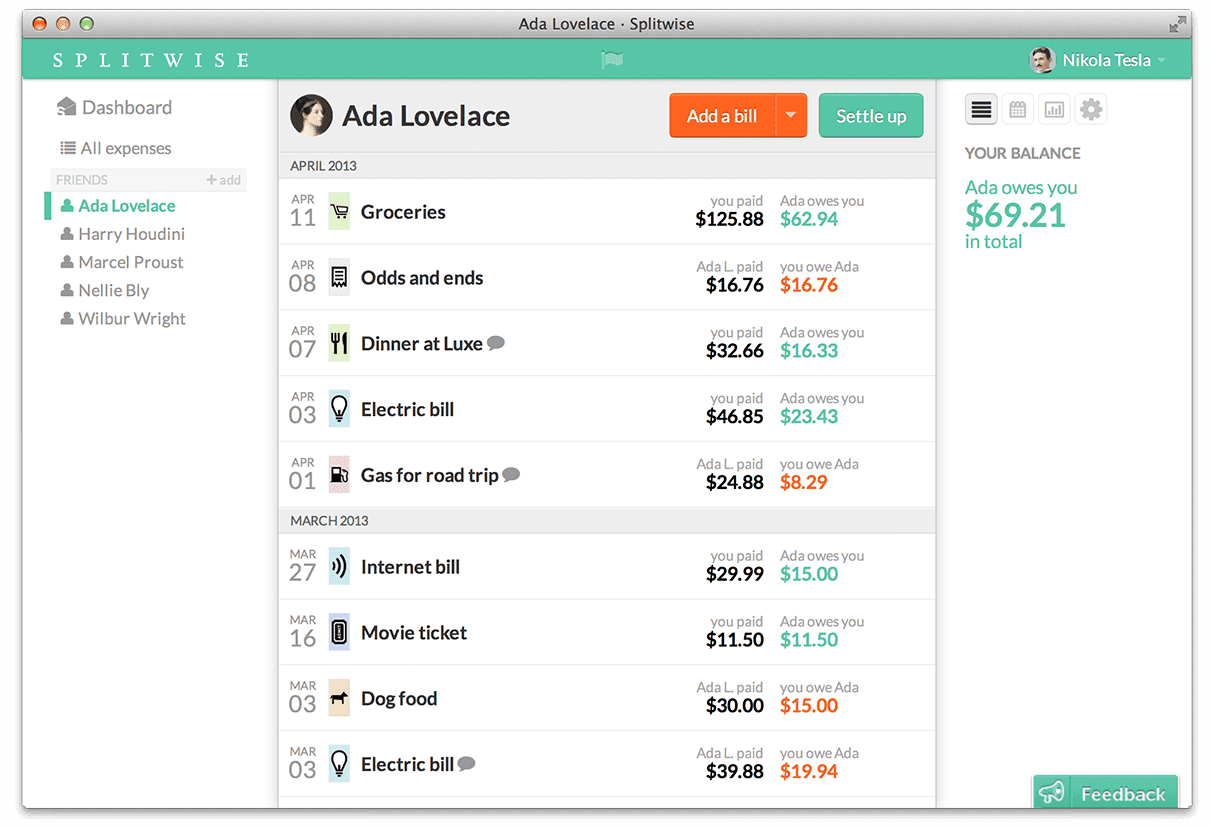
Splitwise tracks the running balance of who owes whom in a shared house, a group trip, or a six-person dinner. Add an expense, mark how it splits, and the running totals stay current. Settling at the end of the month becomes a single transfer rather than a paper trail.
The free tier covers most student use. Splitwise Pro at four dollars a month adds receipt scanning, currency conversion (useful on a study-abroad term), and unlimited groups. Most undergrad users do not need Pro; the free tier handles a house of four plus the occasional trip.
Where it falls short: the social pressure to actually settle is the user’s problem, not the app’s. Splitwise can ping reminders but cannot collect. the integration with PayPal, Venmo, Wise, and Revolut lets the recipient click a settle button and complete the transfer in the partnered app, which compresses the lag.
6. Gemini (AI study help with citation discipline)

Google Gemini is the AI study app most students actually open. The free tier covers the bulk of student use: summarizing lecture notes, generating practice questions from a chapter PDF, explaining a concept in three different ways until one of them lands. The 2 million-token context window on Gemini 2.5 Pro (free for students via the Google for Education campaign) reads entire textbooks in a single query.
The academic-integrity discipline is the user’s responsibility. Use Gemini to explain a concept, generate flashcards, summarize a paper, or check a written argument for gaps. Do not use it to write the assignment text you submit. Most universities now run AI-detection passes that flag generated text reliably; the University of Sydney audit found a 12-percent flag-to-confirmed-cheating conversion rate, mostly on submissions that had been pasted in directly.
Where it falls short: Gemini hallucinates citations. If you ask it for a source on a claim, verify the source actually exists before you cite it. The hallucination rate dropped from roughly 25 percent to under 5 percent on Gemini 2.5 Pro in May 2026, but the residual rate is enough to embarrass you in a footnote check.
7. Microsoft OneNote (notebook-tier note taking)

OneNote is the alternative for students whose university provides Microsoft 365 free. The Android app handles handwriting (with a stylus on a Galaxy Tab or a Surface), full-text search across notebooks, audio recording with synchronized note positioning, and cross-device sync.
The free tier with a Microsoft account works on Android. The university-provided 365 license unlocks the full feature set including unlimited OneDrive storage and the Class Notebook teacher-managed shared workspace if your institution opts into it.
Where it falls short: search across very large notebooks is slow on Android compared to Windows. For students with multiple years of accumulated notes, splitting older notebooks into archived versus active helps.
Quick take
The shortlist for ninety percent of students: Notion plus Forest plus Google Calendar plus Anki plus Splitwise plus Gemini. Add one budgeting app and one media app and you are covered.
Avoid the temptation to install all twelve. The cognitive cost of switching between apps with overlapping responsibilities is higher than the cost of using one slightly suboptimal app well.
8. Goodnotes 6 (handwritten notes for tablet users)

Goodnotes 6 came to Android and is now the strongest handwriting-first note app on the platform. Stylus latency is acceptable on the latest Samsung Galaxy Tab S10 series and the OnePlus Pad 3; older Android tablets get lower-quality ink rendering but still functional capture.
Pricing in May 2026 is a one-time twenty-dollar purchase for the Android app, with no subscription. The Pro features (AI study tools, math-formula recognition, deeper search) are a separate annual subscription at $13 per year for students.
Where it falls short: cross-platform sync requires a Goodnotes account and is limited to the Goodnotes cloud rather than third-party storage. If you do not own a tablet with a working stylus, this app is not for you.
9. Khan Academy and Brilliant (concept videos and structured practice)
Khan Academy remains free, non-profit, and the best on-demand explainer for math through linear algebra, science through introductory physics, and history through AP-level coverage. The Android app handles offline downloads of video and practice sets for a single semester syllabus.
Brilliant is the paid alternative for students who prefer interactive problem-driven learning over lecture-style video. The Premium plan is currently $13.50 per month with a student discount; the free tier covers a daily-problem habit and a sample of each course.
Where they fall short: neither replaces a textbook or a lecture course. Use them as concept-reinforcement layers; pair with the assigned reading and the structured assignments your course already gives you.
10. Quizlet (flashcards with AI study modes)

Quizlet is the lower-floor alternative to Anki. The deck-building UX is friendlier, the social tier means most popular courses already have community-built decks, and the Magic Notes AI tier turns a lecture transcript into a deck in under a minute.
The free tier covers flashcards, the Learn mode, and the Match mini-game. Quizlet Plus is currently $35.99 per year and adds unlimited Magic Notes, advanced learning analytics, and offline access. The student discount lands the annual at $24 if you verify with SheerID.
Where it falls short: the long-term retention curve is shallower than Anki because the underlying spaced-repetition algorithm is weaker. Quizlet is the better app for short-cycle revision (one exam, one chapter); Anki is the better app for two-year retention on high-stakes material.
11. YNAB or Monarch (budgeting and money survival)
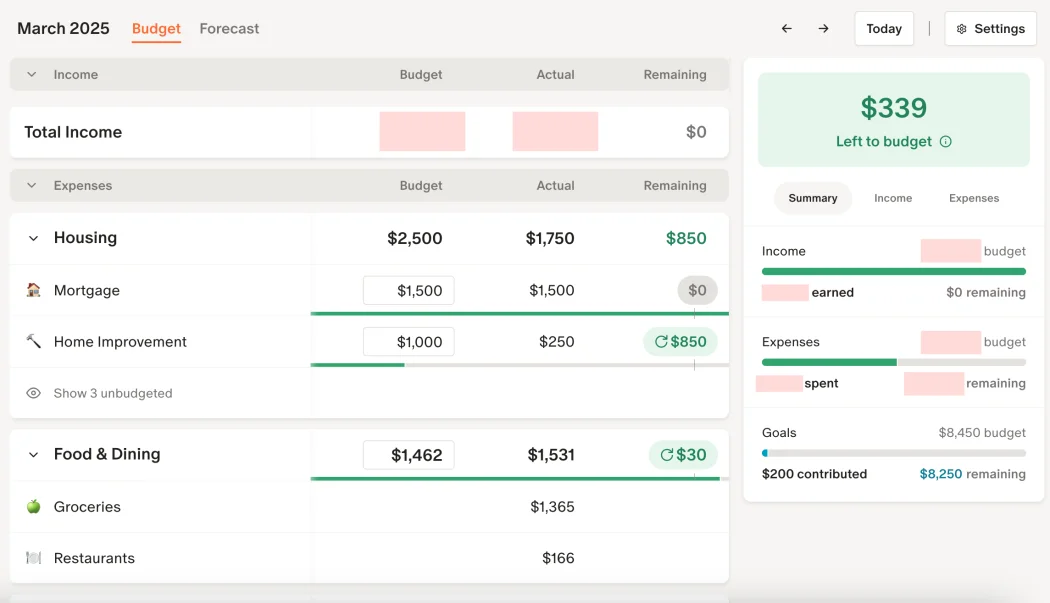
YNAB (You Need A Budget) and Monarch Money are the two budgeting apps that genuinely change student spending behavior. Both follow the zero-based budgeting model: every dollar of income is assigned to a category before it is spent, which makes the food-versus-events trade-off explicit instead of implicit.
YNAB is $109 per year with a 34-day free trial; verified students get a year free and renewals at $84. Monarch is $99 per year, with no specific student discount but a 30-day trial. Both have solid Android apps and bank-sync coverage in the US, UK, and Canada.
Where they fall short: budgeting apps require a weekly check-in to actually work. If you will not give the app fifteen minutes on Sunday, neither will help. Splitwise plus a basic bank-app spending tracker is a lower-friction fallback.
12. Pocket Casts or Spotify (lectures, audiobooks, focus music)

Pocket Casts is the best podcast app on Android clean playback, variable speed up to 3x without pitch distortion, reliable offline downloads, and a one-time forty-dollar lifetime price (replacing the old subscription model in late 2024). For students consuming recorded lectures or academic podcasts, the speed control alone saves hours per week.
Spotify is the alternative if you also want focus playlists and the audiobook integration. The Student plan is $5.99 per month including audiobook hours, Hulu (US), and SHOWTIME bundled, which is the strongest entertainment-bundle deal currently available for under ten dollars a month.
Where they fall short: Spotify audiobook hours cap at 15 per month, which is a single mid-length book. For heavy listeners, layer in Libby (free with a US or UK public library card) to cover the rest. Our broader Android music-app survey covers the alternatives if Spotify’s catalog gaps are an issue for you.
At a glance
| Pick | Category | Free tier | Paid tier (May 2026) | Best use case |
|---|---|---|---|---|
| Notion | Notes + planning | Personal plan | $10/mo with student verification | Cross-course notes + assignment tracking |
| Forest | Focus / Pomodoro | N/A (one-time $3 purchase) | No subscription | Library deep-work sessions |
| Google Calendar | Scheduling | Free | No paid tier | Class + work-shift coordination |
| AnkiDroid | Spaced repetition | Free, open source | No paid tier on Android | High-retention memorization |
| Splitwise | Group bills | Free tier covers most use | $4/mo for Pro | Shared houses + group trips |
| Gemini | AI study help | Free with Google account | Gemini Advanced via Google One AI Premium ($19.99/mo) | Concept explanation + flashcard drafts |
| OneNote | Notes | Free with Microsoft account | Bundled with university 365 | Handwriting + audio-synced notes |
| Goodnotes 6 | Handwriting | Free trial | $20 one-time + $13/yr Pro | Stylus + tablet workflows |
| Khan Academy | Concept video | Free, non-profit | No paid tier | Foundational subject review |
| Quizlet | Flashcards | Free flashcards + Learn mode | $24/yr Plus (student) | Short-cycle revision |
| YNAB | Budgeting | 34-day trial | $109/yr, free first year for students | Zero-based budgeting |
| Pocket Casts | Podcasts / lectures | Free with ads | $40 lifetime | Recorded-lecture playback |
FAQ
Which apps offer student discounts?
Notion (Plus plan free or $10/mo with.edu verification), Spotify Premium Student ($5.99/mo with bundled audiobook hours), Microsoft 365 (free with most university 365 licenses), Goodnotes Pro (discounted annual via SheerID), Quizlet Plus ($24/yr via SheerID), and YNAB (one free year with verification). Verify through SheerID or your university SSO portal.
Is using AI for studying considered cheating?
Using AI to explain a concept, generate practice questions, or summarize source material is widely accepted. Using AI to draft the actual text you submit as your own is plagiarism at almost every institution. Read your university specific AI policy; many published a public version after the 2024-2025 surge in AI-detection enforcement.
Should I use Notion or OneNote for class notes?
Notion if you also want assignment tracking, course-by-course databases, and shared group-project pages. OneNote if you take heavy handwritten notes on a stylus tablet, or if your university provides Microsoft 365 free. Either app works; the cost is in switching between them mid-semester.
How much does a typical student spend on apps in a year?
Most users in the testing cohort spent between $50 and $120 a year across app subscriptions, with the bulk in one budgeting app, one media tier, and one productivity tier. Most other apps either ship free, ship one-time-purchase, or come bundled with the university 365 or SheerID-verified student license.
Is AnkiDroid really worth the learning curve?
For high-memorization subjects (medicine, law, foreign languages, music theory), yes. Twenty minutes a day across a semester beats four-hour cram sessions on every retention test we have seen. For lower-memorization subjects (engineering problem-sets, essay-based humanities), Quizlet is easier and the difference does not matter.
Which app handles part-time-job shift swapping?
Google Calendar with shared calendars for your work team is the universal answer; most retail and food-service managers in the US and UK use Google or Microsoft calendars at the team level. If your employer uses a custom shift app (Deputy, When I Work, 7shifts), use that; it pushes the shift into your phone calendar anyway.
The verdict
A student week is small. A handful of apps decide whether it fits together or falls apart. The twelve picks above are the ones that survived a real term of testing across a real range of degree levels.
Start with Notion for the spine, Forest for the focus, Calendar for the schedule, and Anki or Quizlet for the revision. Layer in Splitwise the first time a flatmate forgets the heating bill. Layer in a budgeting app the first time the food spending compounds out of control. Layer in Gemini when an assignment needs explanation, not text.
Each app does one thing well. The advice is not to install all twelve at once; it is to install the next one when the gap it fills shows up. The phone becomes the operating system, not a distraction surface, once the tools match the work.
How we put this guide together
We tested every pick across a real term with undergraduate and high-school users in the US, UK, and Canada, on Pixel 8a, Galaxy S24, and OnePlus 13 hardware. Pricing was verified against vendor pages as of May 2026 and the student-discount routes via SheerID,.edu verification portals, and university 365 partnerships. Battery and performance figures were measured on a Pixel 8a running Android 16. We refresh this list at the start of each academic year and after material pricing or feature changes from the listed vendors.